


Hidradenitis Suppurativa Treatment
Part of the Hidradenitis & Recurrent Skin Disorders Centre
You have probably been treating this at the skin for years. HS is a systemic condition that expresses through your skin — which is why treating only the skin has never held.
- 5internal driver systems assessed
- 5sequenced treatment phases
- Remotefirst, with in-clinic intensives where needed


The Many Presentations of Hidradenitis Suppurativa
Hidradenitis Suppurativa does not look the same in every patient. At EPOH® / Elite Ayurveda™, we encounter patients with HS affecting different anatomical areas and presenting with varying patterns of inflammation, drainage, tunnelling, scarring and disease complexity.
The clinical images below represent different presentations of HS encountered in our practice. They are presented to help patients understand the wide spectrum of the condition and are not intended to represent guaranteed treatment outcomes.
The cases that follow are ordered by severity, most advanced first — multi-site and tunnelling disease before early nodular disease. We would rather you judge this on the hardest cases than the easiest.
Your HS may look different. Your clinical assessment and care plan should be individualised to your disease pattern, affected sites and severity.
Multi-site HS
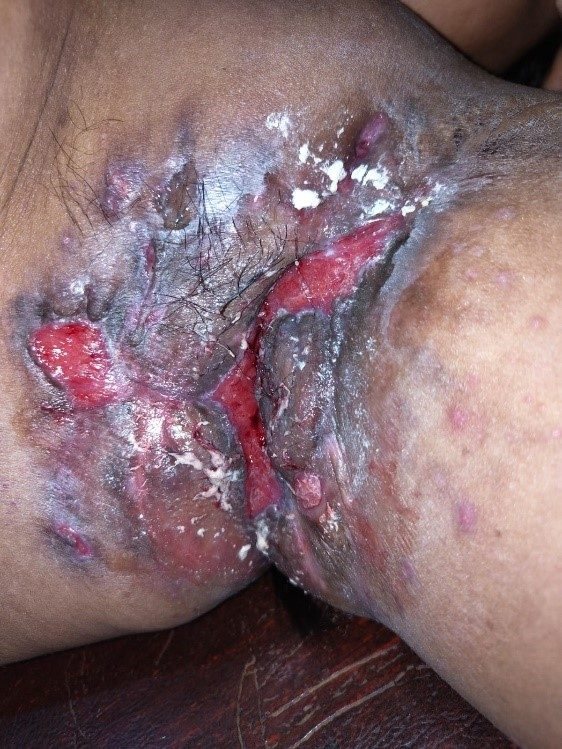 Baseline
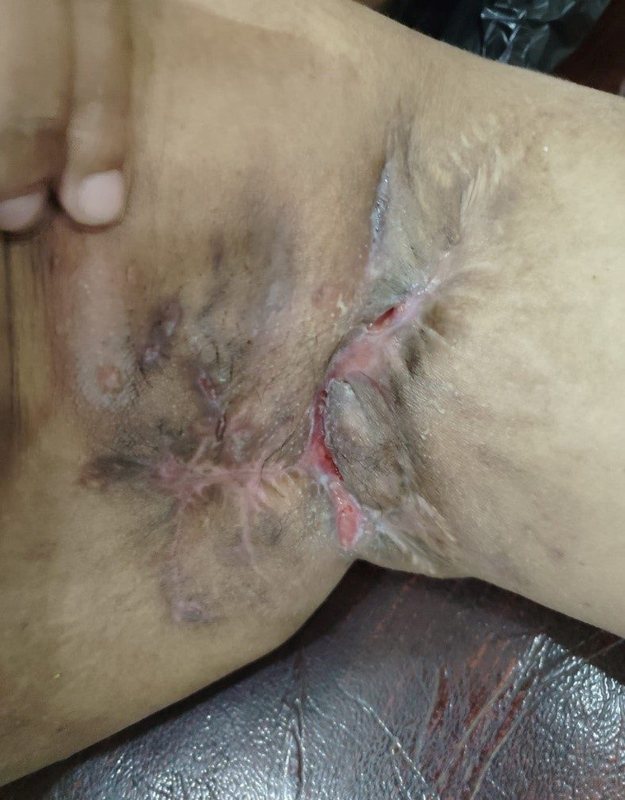 Month 9
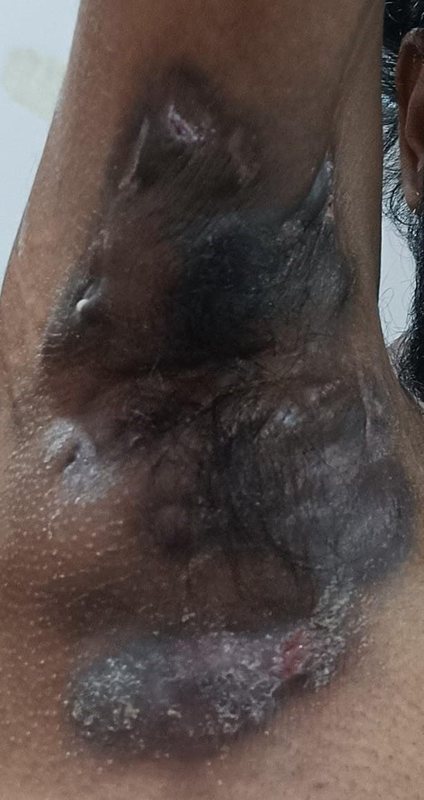 Baseline
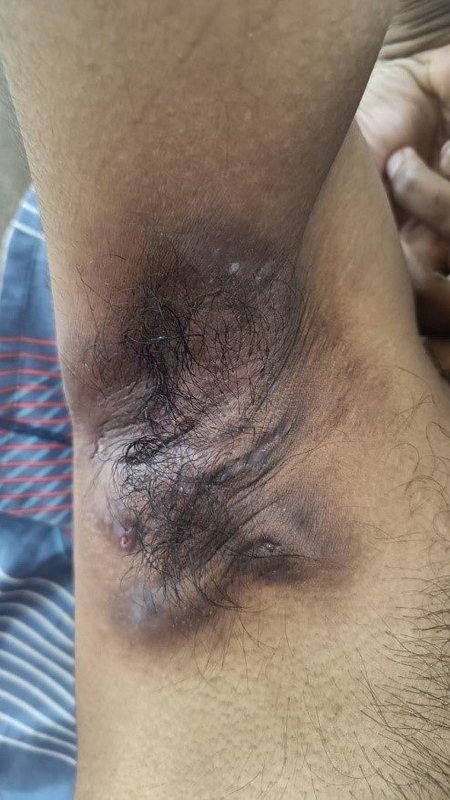 Month 9
Axillary (underarm) HS
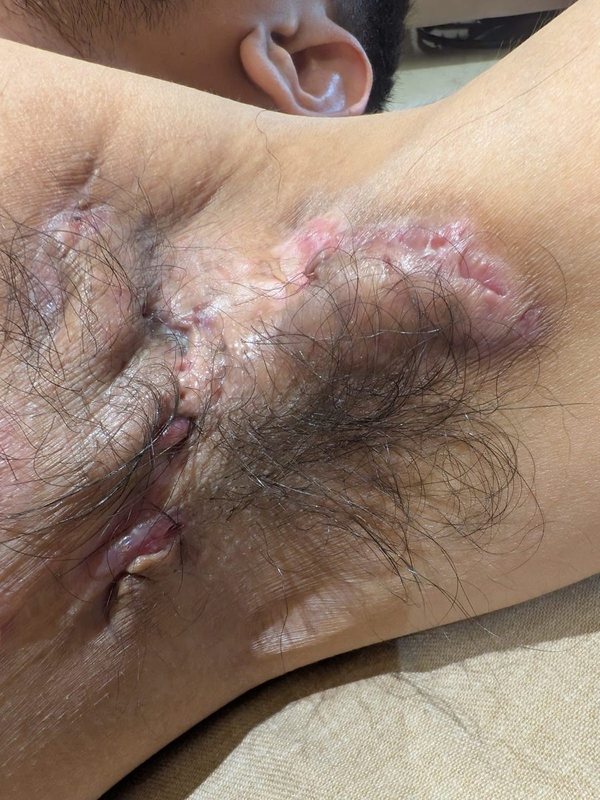 Baseline
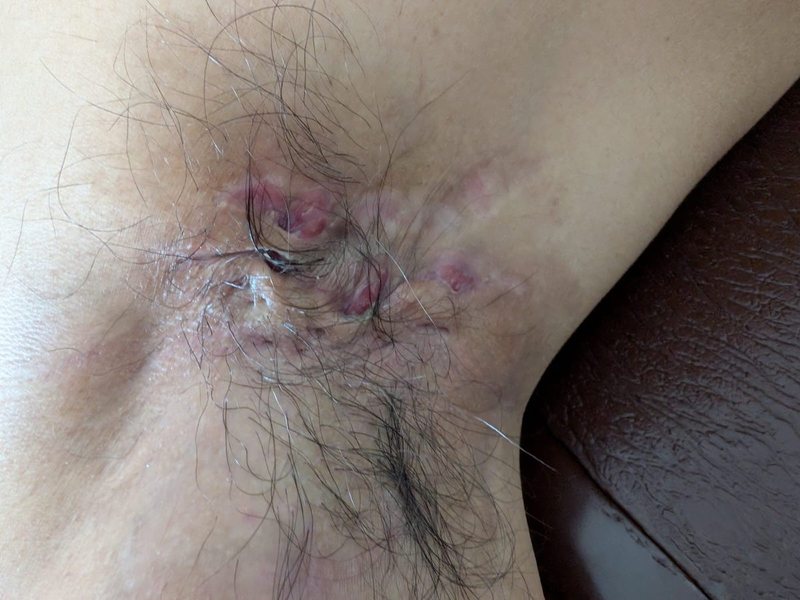 Month 9
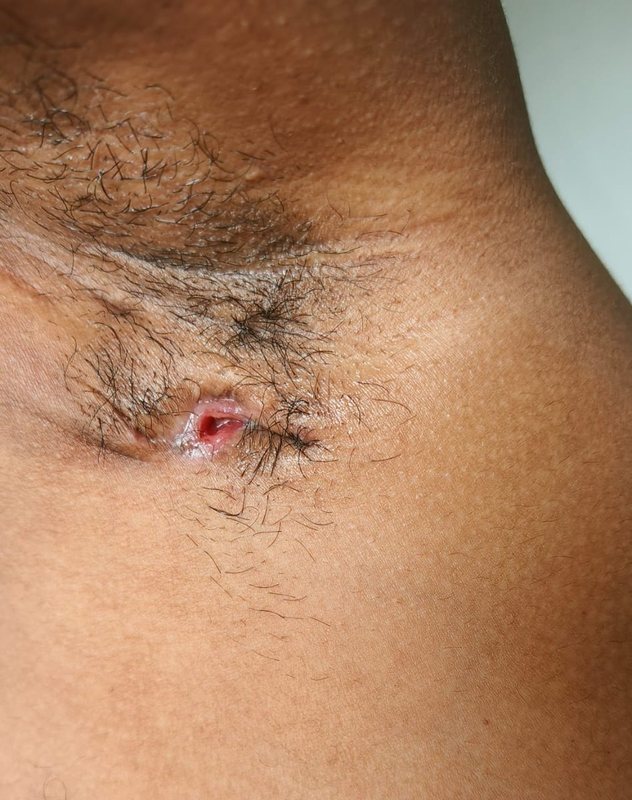 Baseline
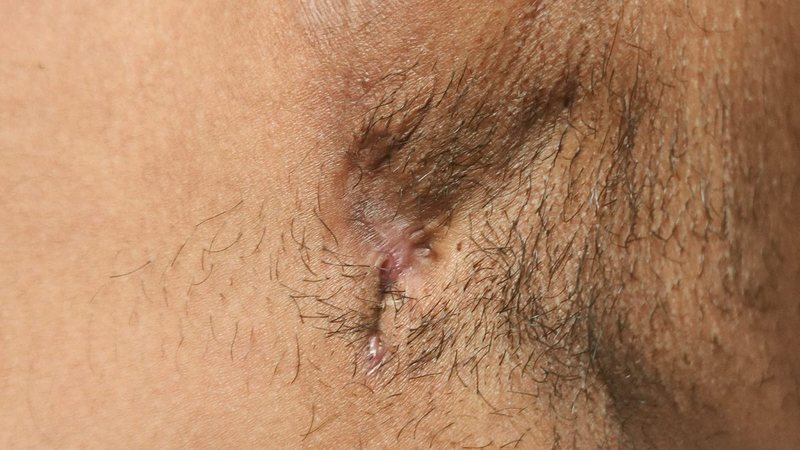 Month 6
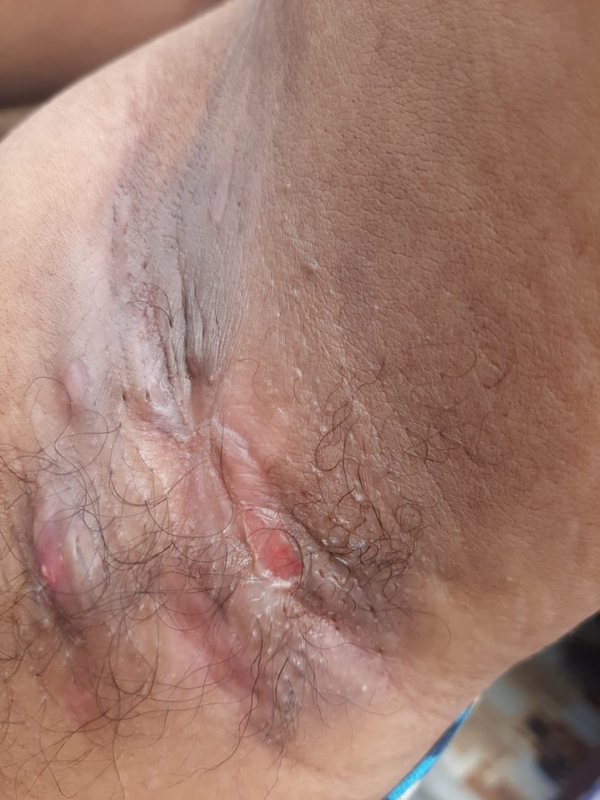 Baseline
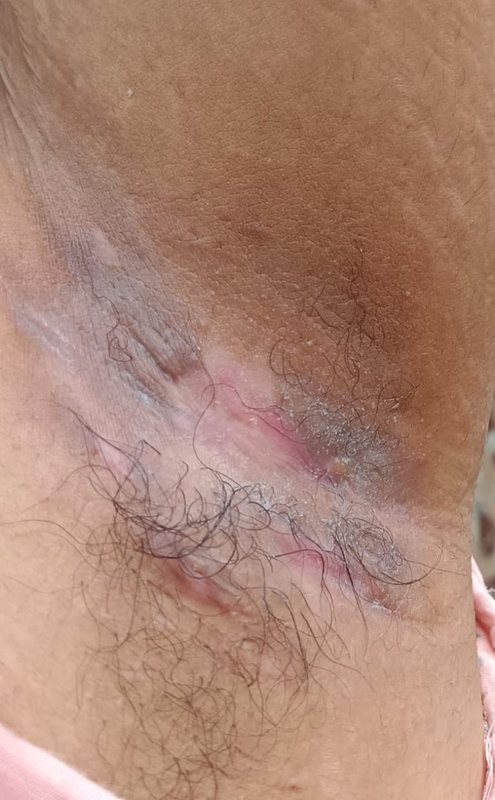 Month 3
Bilateral axillary HS
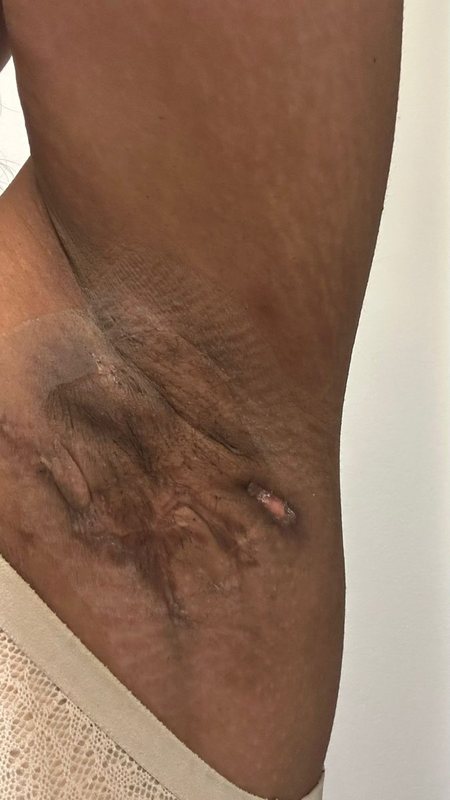 Left · baseline
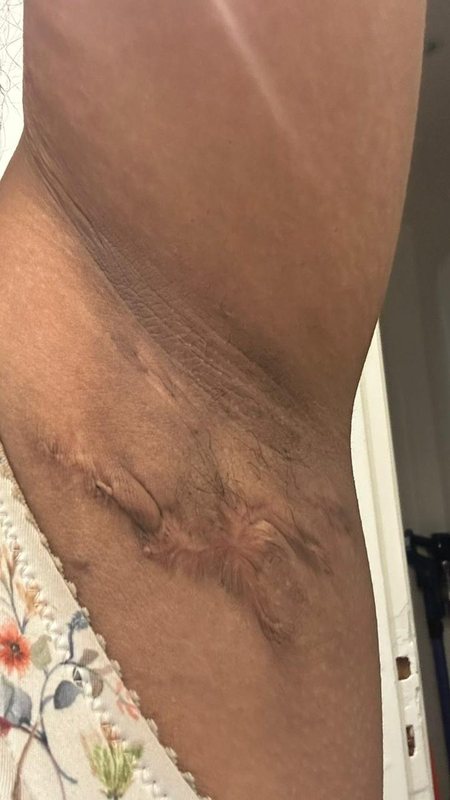 Left · month 3
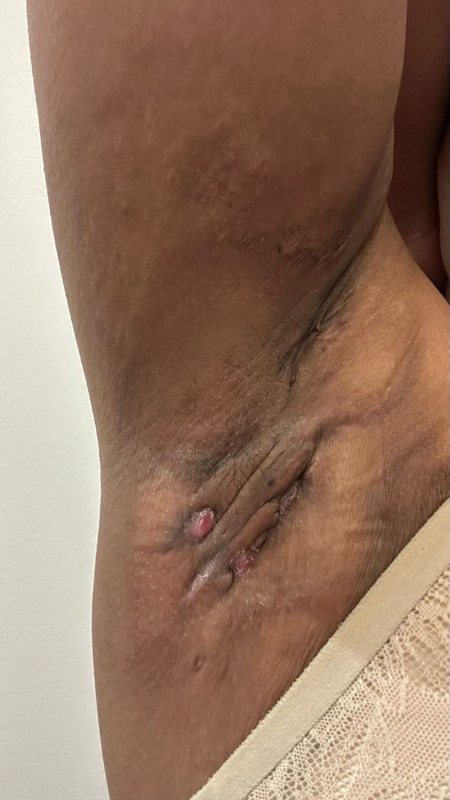 Right · baseline
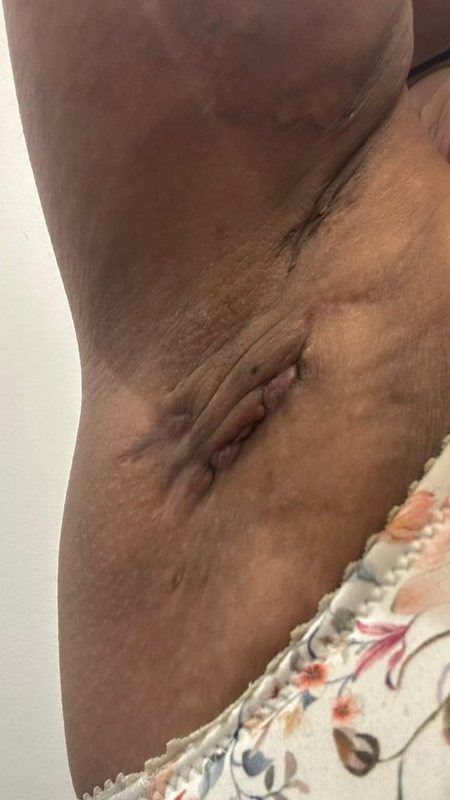 Right · month 3
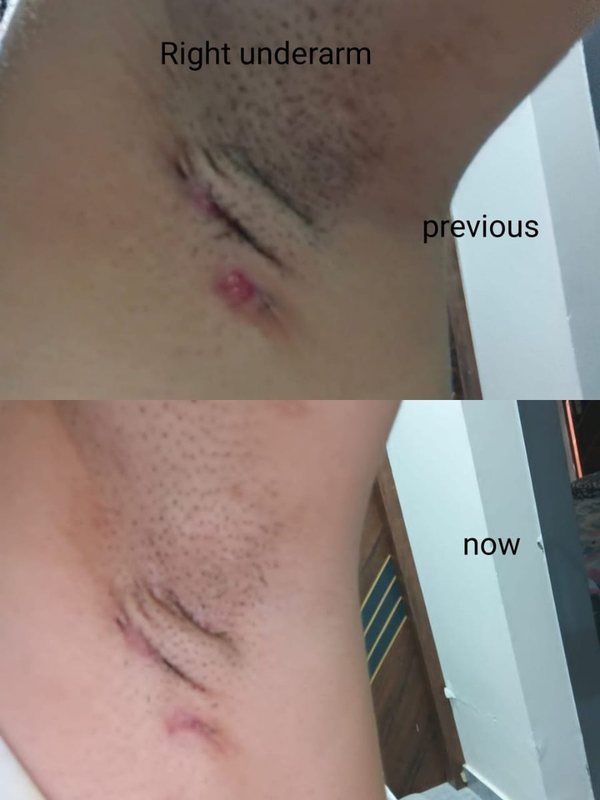 Left axilla
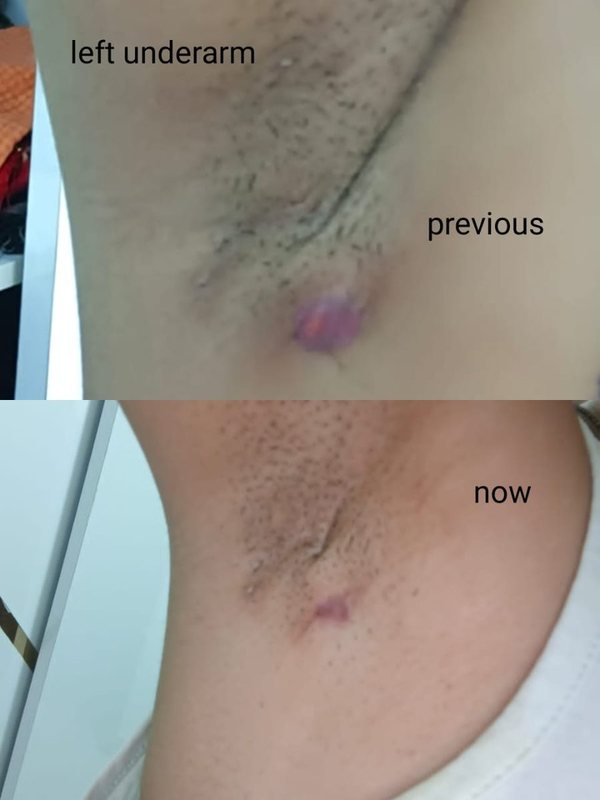 Right axilla
Intermammary & anterior chest HS
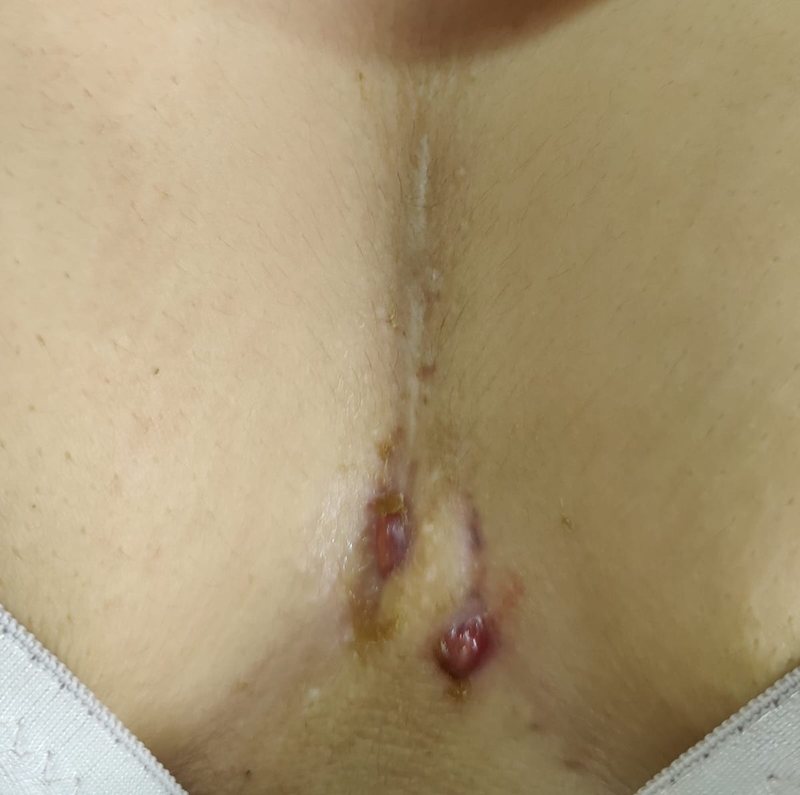 Baseline
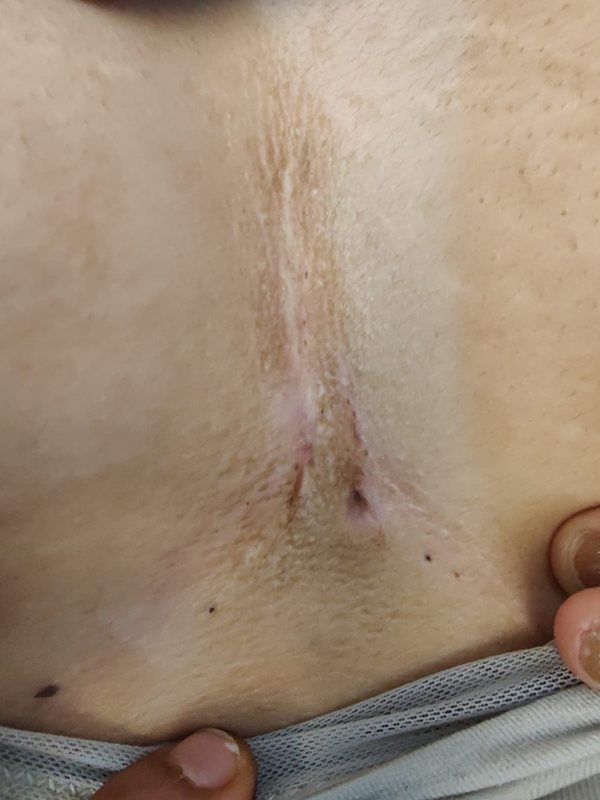 Month 3
 Baseline
 Month 3
Three cases documented in detail
For three of the patients shown above, structured outcome measures were recorded at each visit — at baseline and again at month 9. Individual, dated documentation; not a clinical trial and not a claim about what any other patient should expect.
Multi-site disease
27 F · Hurley III · 6–7-year history
| Outcome measure | Baseline | Month 9 |
|---|---|---|
| Pain (VAS) | 8/10 | 0/10 |
| Active lesions | 5 | 1 |
| Drainage score | 4 | 1 |
| Range of motion | Restricted | Normal |
| Quality of life | Severely impaired | Markedly improved |
Remission status: Marked clinical improvement, approaching but not fully meeting predefined remission criteria — minimal residual lesion activity and drainage remained at month 9.
Multi-site disease
30 M · Hurley III · 3.5-year history
| Outcome measure | Baseline | Month 9 |
|---|---|---|
| Pain (VAS) | 9/10 | 0/10 |
| Active lesions | 6 | 0 |
| Drainage score | 4 | 0 |
| Range of motion | Restricted | Normal |
| Quality of life | Severely impaired | Markedly improved |
Remission status: Fulfilled the predefined clinical remission criteria at month 9 — no active nodules, abscesses, drainage or draining sinus tracts.
Axillary disease
34 M · Hurley III · 7-year history
| Outcome measure | Baseline | Month 9 |
|---|---|---|
| Pain (VAS) | 6/10 | 0/10 |
| Active lesions | 2–4 | 0 |
| Drainage score | 4 | 0 |
| Range of motion | Restricted | Normal |
| Quality of life | Moderately impaired | Markedly improved |
Remission status: Fulfilled the predefined clinical remission criteria at month 9 — no active nodules, abscesses, drainage or draining sinus tracts.
What this is, and is not. These are individually documented cases with dated follow-up, not a controlled clinical trial and not a claim about what any other patient should expect. VAS pain, lesion count and drainage score are the patient’s own reported or observed measures at each visit, recorded at the time — not retrospectively estimated. Two of the three detailed cases met full remission criteria at month 9; one showed marked improvement without meeting every criterion. We show all three, not only the strongest outcome.
What we hear most often
HS is usually described as manageable rather than resolvable — something to live around: the clothes that no longer work, the cancelled plans, the way an arm gets held.
For most people there have been antibiotics that worked until they didn't, and the same lesion cut from the same place more than once.
At some point it was usually put down to hygiene, or friction, or weight. It was none of those — the lesions kept returning to the same folds regardless of what changed.
None of that means the disease is untreatable. It means it was being treated at the wrong level.
Thousands of people living with HS type some version of this question every week. The answers they find explain the symptom. Very few explain the source.
The questions people ask us first
These are the questions we are asked most, answered plainly — including where the honest answer is “sometimes” rather than yes.
Will it keep coming back?
That depends entirely on whether the thing driving it was ever addressed.
HS returns after antibiotics and after excision because neither changes the internal process generating the lesions. Surgery removes the tissue, not the cause — which is why disease so often reappears near the excision rather than in it. The fifth phase of our sequence exists for exactly this reason: after the disease quiets there is a long window of active monitoring, watching for early inflammatory shifts before they become lesions. Stable remission is assessed from month 8 onward, not before. What we cannot undo is scarring. Scar is structural, and no internal treatment reverses it — ours included.

Not sure this is HS at all? Recurrent abscesses — when it is HS, and when it is not →
Will I need surgery?
We do not perform surgery, and we will not tell you to cancel one.
There are no procedures in what we do. Whether you need to come in depends on how advanced the disease is. Early and mild disease is usually managed entirely remotely, with formulations couriered to you. Most moderate to severe cases — extensive tunnelling, disease across multiple sites, advanced staging — need a period of intensive in-clinic therapy alongside the internal treatment. That is decided at assessment from what your disease is doing — not after months of remote treatment have failed — so you are told before you start, not after. Plan for a few weeks rather than a few days: the exact length is set at your initial consultation, and remote follow-up continues afterwards. Where established tunnels and dense scarring already exist, that tissue is structural: treatment can quiet the inflammation around it, but it does not dissolve it, and a surgical opinion may still be the right call. That is a conversation with your surgeon, and we will give you our clinical reading to take into it. What treatment can change is the process that keeps producing new lesions elsewhere.
HS surgery, and what it does and does not solve →How long before I see anything?
Sooner than your skin will show it, and later than you want.
Weeks 1–4: digestion, sleep and energy usually shift first, and the skin often has not changed at all. That is expected, not failure. Weeks 3–6 is a plateau where improvement stalls — it is also where most people who quit, quit. Months 2–4 is when the disease itself should begin to change. Months 4–8, the same triggers produce a diminished response and medication-reduction conversations become appropriate. Stable remission is assessed from month 8. If you need a fast result, this is the wrong treatment, and we would rather say so now than take your money.
Does this actually work — an honest answer →I’ve tried Ayurveda before and it did nothing.
That is a fair thing to say, and it is the objection we hear most.
There are three structural reasons Ayurvedic treatment commonly fails for HS, and none of them is “you didn’t believe hard enough”. Sequence — most approaches lead with a detox, which belongs third, and doing it before the load is down and the gut is repairing makes HS worse. Generic protocol — treatment built from the condition name rather than your driver profile, so an androgen-driven case and a gut-driven case get the same herbs and one of them fails. Stopping at the plateau — leaving at weeks 3–6, before the primary correction phase has even begun.
Read the full answer →Can I stay on my biologic?
Yes — and you should. Do not stop it.
You begin the protocol while continuing your current medication. Stopping suppression abruptly risks a rebound flare, and it confounds the clinical picture so thoroughly that nobody can tell what is working. As the internal repair and detox phases take effect, medication is reviewed with your prescribing physician and reduced gradually. Discontinuation is the goal — it is not the entry fee.
What medication reduction actually looks like →How do I know this isn’t just expensive herbal supplements?
Because a supplement is a product and this is a sequence.
Formulations are compounded to your driver profile across five functional categories, each doing a specific job in a specific phase — inflammatory load reduction, internal correction, functional clearance, external tissue repair, remission maintenance. Two HS patients at the same Hurley stage with different drivers receive different formulations. There is no standard HS pack, and there is nothing to buy off a shelf.
What it does require, honestly: taking things daily for months, and turning up to reviews.
What the formulations actually are →We also publish who this does not help, and exactly what we measure instead. See what we measure and when we judge it →
Three things we do differently — specifically for this disease
Before any of it, we stage two things separately. EPOH-DSS measures how advanced the disease is — four stages, mapped to the Hurley stage your dermatologist already gave you. Recovery Stage measures how you are responding to treatment, which is a different axis entirely: you can be Stage 3 disease and Recovery Stage 2 at the same time. Conflating the two is precisely how patients abandon something that is working.
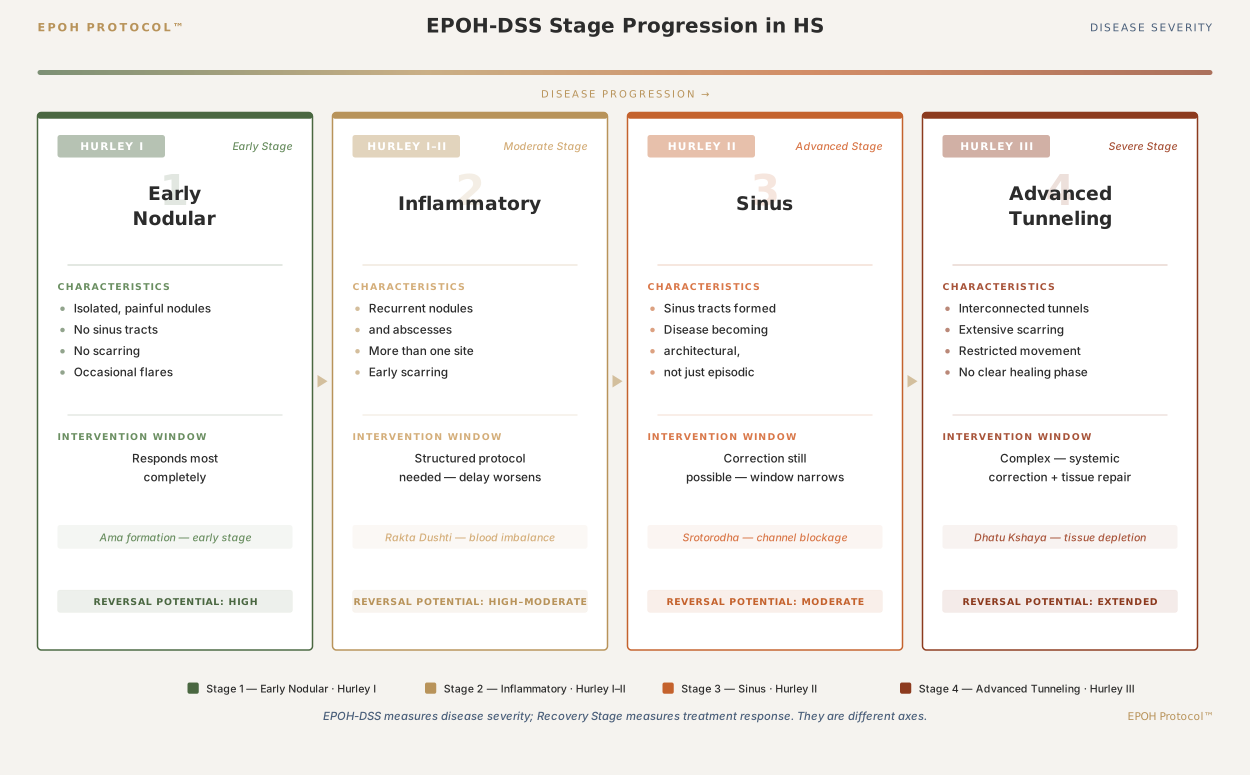
How EPOH-DSS maps to Hurley staging → · The framework behind the driver profile →
We treat your driver profile, not your diagnosis
Two patients with identical Hurley staging can have entirely different diseases — one androgen- and insulin-driven, one gut- and immune-driven. Given the same treatment, one responds and one does not. Every evaluation identifies which of the five internal systems is generating your HS before a single formulation is compounded.
We can tell you why your last detox made it worse
Detox comes third in our sequence, not first. Run it before the inflammation has been brought down and the gut has been repaired, and it releases more waste into your system than your body can clear — so the HS flares. Most natural treatments start with detox. If that is what happened to you, the problem was the order, not the idea.
Most patients never have to undress in a room
Evaluation by video or WhatsApp. Formulations compounded and couriered to you, in India or internationally. For early and mild disease: no procedures and no clinic visit at all. For a disease that affects the groin and the armpits and carries the shame this one does, that is not a convenience — for many patients it is the reason they finally seek treatment at all.
Five phases, and the order is the treatment
Every phase has a specific biological job, and each one depends on the last having been done. This is not a sequence of products. It is a sequence of internal states, and skipping ahead does not speed it up — it sets you back.
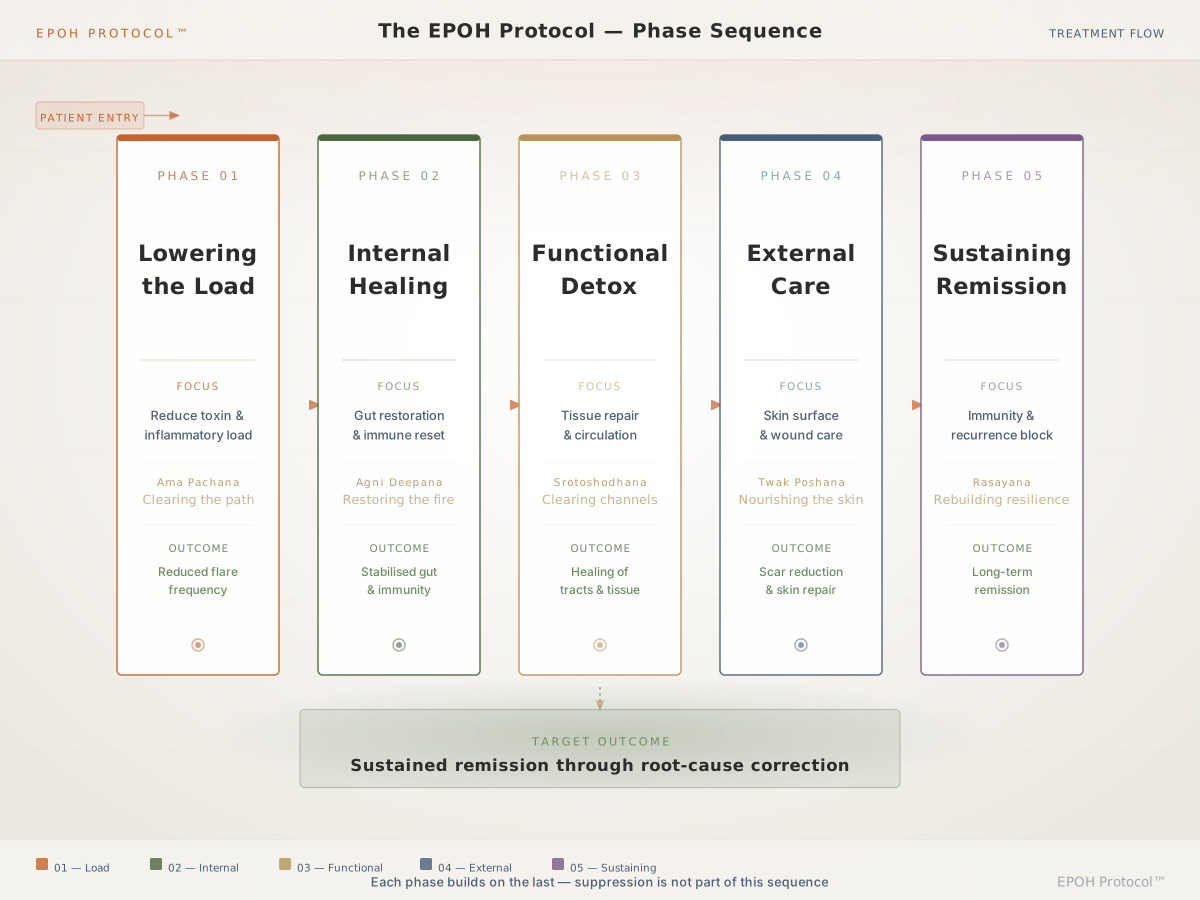
-
Lowering the Load
4–8 weeksOral formulations that reduce the accumulated inflammatory burden (Ama), support digestion, and calm overactive immune signalling. This phase prepares the internal environment so that correction is possible at all. Dietary guidance runs alongside it — it is complementary, not the phase itself.
-
Internal Healing
8–16 weeksThe primary correction phase, and the one your outcome turns on. Oral formulations restore gut lining integrity, support microbiome repair, recalibrate immune signalling, and address the hormonal patterns driving cyclical flares. For most HS patients this is where the disease actually changes.
-
Functional Detox
6–12 weeks · often overlapping Internal HealingOral formulations supporting lymphatic clearance and tissue-level clearance from within. Note the position: third. Not first. For most patients there are no procedures here — no purgation, no enema, no in-clinic therapy. “Functional detox” means formulations that help the body clear what it is already carrying.
-
External Care
Ongoing through Internal Healing and Functional DetoxTopical formulations for active lesion resolution, sinus-tract healing and skin-barrier restoration. These work because the internal conditions have already shifted. External care without internal correction is exactly what you have already tried, and it is why it gave you limited, temporary results.
-
Sustaining Remission
6–12 months active monitoringFormulation tapering, immune resilience, and monitoring for early inflammatory shifts before they become lesions. This is maintenance of a restored internal state — not indefinite suppression, and not a subscription.
Why the sequence is non-negotiable — and why your last detox made things worse
Detox releases stored waste into your system. If the load has not been lowered and the gut has not begun repairing first, that waste is released faster than your system can clear it — so it is redistributed rather than eliminated, and the condition flares.
Nearly every HS patient who has looked into natural treatment has been sold a cleanse or a detox as step one. A significant number got worse. If that happened to you, the timing was the problem — not the idea. It is also useful clinical information, and worth telling us about.
EPOH compared with conventional management
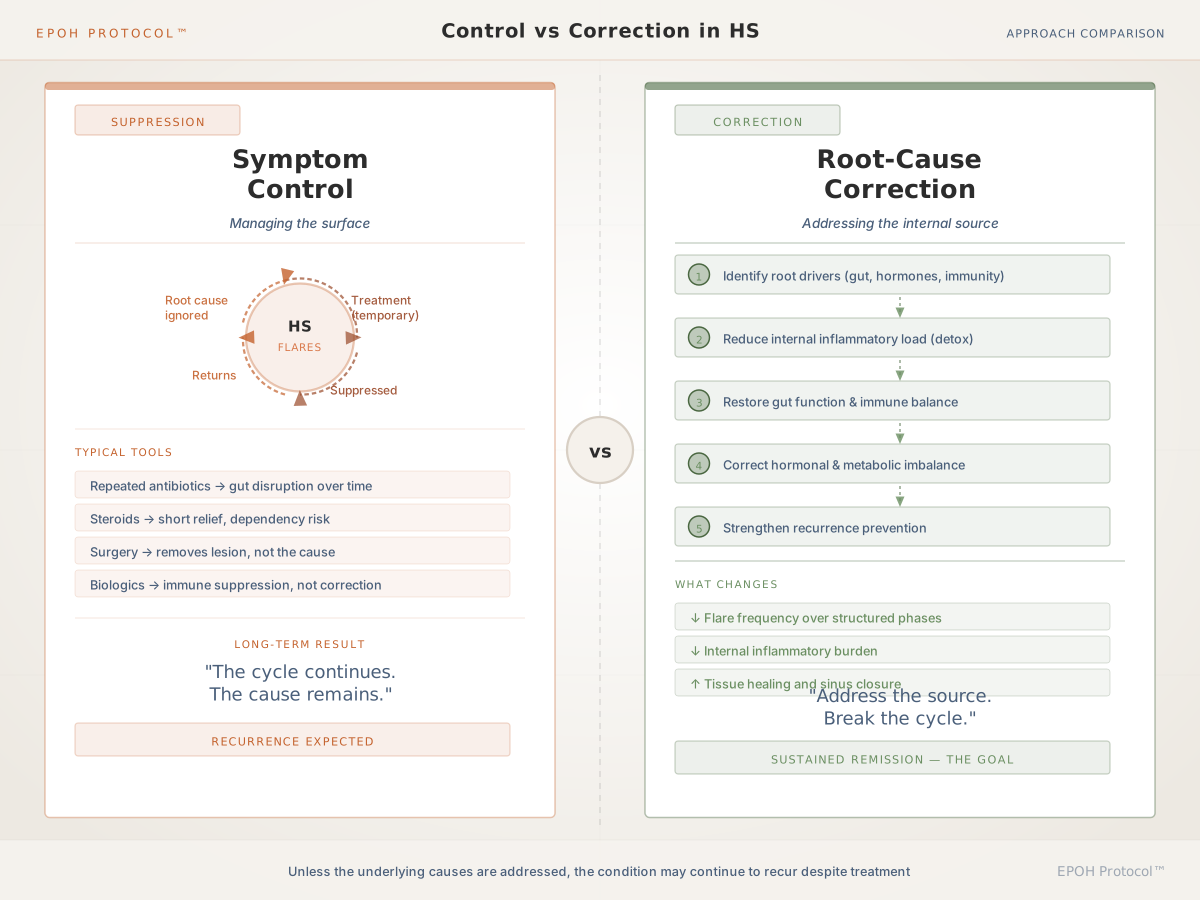
| Conventional approach | EPOH approach | |
|---|---|---|
| Primary target | Surface lesion, bacterial load, inflammatory signalling | The internal imbalance driving lesion formation |
| Treatment model | Management — keep symptoms under control indefinitely | Correction — address and resolve the underlying drivers |
| Personalisation | Protocol-based — the same drug for most patients with the same diagnosis | Pattern-matched to your individual driver profile |
| Recurrence logic | Expected; treated as a permanent feature of the disease | A signal of unresolved root cause — addressed directly |
| Gut health | Not typically addressed; antibiotics often worsen it | A central treatment priority |
| Hormonal factors | Addressed separately with hormonal medication, if at all | Integrated — a core objective of the internal-repair phase |
| Medication trajectory | Ongoing, often escalating | Structured reduction toward discontinuation as correction takes effect |
| Long-term aim | Minimise flares; maintain control with ongoing treatment | A stable internal state in which the condition no longer drives symptoms |
People who were where you are
Documented courses of treatment — what changed, over what timeframe, and what did not. Identifying details are withheld and outcomes are not generalised. Individual response varies.
Ananya's Hidradenitis Suppurativa Journey
Nine years. Three surgeries. A biologic every three weeks. The flares came back every time.
Read this story →Aarav's Hidradenitis Suppurativa Journey
It was never the pain that broke him. It was the certainty that it would come back.
Read this story →Neha's Hidradenitis Suppurativa Journey
She had been given hygiene advice for four years. It was never a hygiene problem.
Read this story →Anika's Hidradenitis Suppurativa Journey
Everyone agreed the flares tracked her cycle. Nobody treated the cycle as the driver.
Read this story →What we measure, and when we judge it
HS is judged on how often lesions return and how long you go between them — not on how a photograph looks on any given day. We track five markers from your first consultation and review them at every follow-up, so you can see exactly what has shifted and when to expect the next change.
Five markers, not “clear skin”
Flare frequency. Flare duration. Drainage volume and persistence. Pain severity and how much of your day it takes. Medication load — dose and frequency of antibiotics, steroids, biologics.
We deliberately do not lead on clear skin. It is the last thing to move, and judging progress by it is precisely how patients abandon something that is working.
Month eight, not month two
Weeks 1–4: digestion, sleep and energy shift first; skin often has not changed. Weeks 3–6: the Partial Improvement Plateau — not failure. Months 2–4: the disease should start to change. Months 4–8: same triggers, diminished response. Month 8+: stable remission is assessed. Not before.
What advanced disease changes
Extensive Stage 4 disease with established tunnels and dense scarring: that tissue is structural, and the realistic goal is a lower inflammatory burden and a lower medication load — not remission.
Responds best: earlier-stage disease, shorter duration, preserved repair capacity, a clear driver profile, and starting while still on current medication rather than after stopping it.
The full outcomes page sets out each marker and the reasoning. What we measure and when we judge it → · How we measure progress →
The clinical background, if you want the detail
Everything below is reference material — what HS does, why it does it, how it behaves at each site, and how it is staged. You do not need any of it to start. It is here because some people want to understand the disease properly before they decide anything, and every page links back here.
Symptoms
What HS actually does, and why each of these is so routinely dismissed.
5 pages →Causes
The five internal driver systems, and which ones are generating YOUR HS. Treatment is built from this, not from the diagnosis.
5 pages →HS by site
Where HS sits changes what it does, what it is mistaken for, and what treatment has to prioritise.
10 pages →Stages
EPOH-DSS severity staging, mapped to the Hurley stages your dermatologist uses.
Read →Treatment
The EPOH protocol, in sequence, and why the sequence is the medicine.
Read →Outcomes
What we measure, when we judge it, and when it is not the right treatment.
Read →FAQ
The questions patients actually ask, answered without marketing.
Read →Research
The clinical reasoning in depth — mechanism, objections, treatment experience and outcomes.
171 articles →Documented cases
Real, consented, de-identified case courses — baseline to outcome, with clinical photographs and the measures that changed.
9 cases →Patient stories
Told in the patient’s own words — what living with the condition was like, and what changed.
4 stories →From our Hidradenitis Suppurativa library
171 articles on HS from our clinical team — the drivers, the staging, the treatments that fail and why, and what actually changes the disease.
Why Detoxing First Makes HS Worse
Detox mobilises inflammatory load faster than a compromised gut can clear it. Why we lower the load and repair the gut before any detox, and why your flare made sense.
Read →The Gut–Skin Axis in Hidradenitis Suppurativa
Why hidradenitis suppurativa begins in the gut, not the skin: barrier compromise, immune activation, and why topical, antibiotic and surgical care cannot hold.
Read →Hurley Stage vs EPOH-DSS: Two Ways of Reading Your HS
Hurley I/II/III records surface damage and never improves. EPOH-DSS reads progression and reversibility. How the two map, and why Recovery Stage is a separate axis.
Read →Frequently Asked Questions
The questions patients ask before starting — answered directly, including the ones where the answer is not what you were hoping for.
Hidradenitis Suppurativa (HS) is a chronic inflammatory condition producing painful nodules, abscesses and sinus tracts in apocrine-bearing skin — the armpits, groin, buttocks and under the breasts. It is not an infection, and it is not a hygiene problem. In the EPOH framework HS is understood as a systemic inflammatory condition that expresses through the skin, driven by gut, immune, hormonal and metabolic systems. In Ayurveda it maps to Dushta Vrana (chronic non-healing wounds) and Pidaka (deep pustular inflammation), arising when weakened Agni allows Ama to accumulate and obstruct the Svedavaha and Raktavaha Srotas.
We do not use the word cure. What the EPOH protocol works toward is sustained remission — a stable internal state in which the condition no longer actively generates lesions, maintained without continuous suppressive medication. For many patients that is indistinguishable from being well. It is not the same as a guarantee, and patients with very advanced fibrotic disease may not reach it.
Longer than you will want it to. The first phase — bringing the inflammatory load down — takes 4–8 weeks before surface change is typically visible at all. Reduced flare frequency (Recovery Stage 2) generally appears from months 2–4, reduced severity from months 4–8, and stable remission (Recovery Stage 4) from month 8 onward. Anyone promising you visible results in weeks is selling suppression, not correction.
Early and mild disease is usually managed entirely remotely. Most moderate to severe cases need a period of intensive in-clinic therapy: extensive tunnelling, disease across multiple sites, advanced staging. That is decided at assessment, so you are told before treatment starts rather than after — and plan for a few weeks rather than a few days, with the exact length set at your initial consultation and remote follow-up continuing afterwards. Otherwise evaluation is by video consultation or WhatsApp. Personalised formulations are dispatched by courier. Follow-up, monitoring and phase transitions are all handled remotely. Most patients are treated across India and internationally without attending a clinic. For most patients the EPOH protocol involves no procedures and no in-clinic therapy.
No. Do not stop anything abruptly. You begin the EPOH protocol while continuing your current medication. As the internal repair and detox phases take effect, medication is reviewed with your prescribing physician, and reduced gradually and deliberately. Discontinuation is a goal, not a precondition — and it is never a decision you should make alone.
Because of when it was done, not because it was Ayurvedic. Detox comes third in our sequence, not first. Done before the inflammatory load is down and the gut is repairing, it releases more waste than the body can clear, and the condition flares. This is a known and clinically non-negotiable sequence rule. If a detox made you worse, that is information: the timing was wrong, and it tells us something useful about your case.
They measure different things and are constantly confused. EPOH-DSS Stage 1–4 describes how advanced your disease is now (Early Nodular → Inflammatory → Sinus → Advanced Tunneling). Recovery Stage 1–4 describes how you are responding to treatment over time. You can be EPOH-DSS Stage 3 and Recovery Stage 2 at the same moment — a severe case that is responding well.
Honestly: it depends, and a personalised evaluation is the only way to know. Earlier EPOH-DSS stages, shorter disease duration and a clearly identifiable dominant driver respond most completely. Long-standing disease with extensive fibrosis and established tunnelling responds more slowly and less completely — and patients with very advanced structural change may not achieve full remission. Disease duration, degree of involvement and remaining biological repair capacity all influence the outcome. We would rather tell you that at the start than at month six.
Remote treatment — how it works
Personalised formulations dispatched by courier. Consultations by video or WhatsApp. The entire treatment arc — evaluation, formulation, monitoring, phase transitions — is conducted without you attending a clinic.
- 1. EvaluationVideo consultation or WhatsApp. Full history — not just your skin.
- 2. Driver profileWhich of the five systems is generating your disease, and your EPOH-DSS stage.
- 3. FormulationsCompounded to your profile. Dispatched by courier, in India and internationally.
- 4. ReviewMonitoring and phase transitions, managed remotely on clinical response.
Early and mild disease is usually managed entirely remotely, with no procedures and nothing to travel for. Most moderate to severe disease needs a period of intensive in-clinic therapy, decided at assessment.
What a remote HS consultation actually involves → · How your formulations are made and delivered →
With you,
throughout your treatment journey

Easy Appointments avaliable Online & Offline with the Best Ayurveda Experts in India

Evidence-based Approach for Progressive Health with Dedicated 1:1 Support

Medicines Delivered to your door-step Worldwide Hassle-Free

Structured, AYUSH Vetted Root Level Treatments for Rebalanced Cellular & Metabolic Conditioning

Personalised for Changes on a Deeper Level that will have a Long-Lasting Impact on your Health
Find out whether your case is a candidate
A personalised evaluation is the only way to know which drivers are generating your HS, what EPOH-DSS stage you are at, and what response is realistic for you. If the honest answer is that your disease is too structurally advanced for full remission, we will tell you that.
Led by Dr. Adil Moulanchikkal, BAMS — Lead Specialist, EPOH Protocol
Medical disclaimer. This page is general clinical information, not personalised medical advice. Individual response varies with disease duration, degree of involvement and remaining biological repair capacity — not every patient reaches the same outcome. No medication should be started, stopped or altered without consulting your treating physician.
EliteAyurveda™ in Numbers
28,000+
Patients Treated
Among World's leading experts on Ayurveda treatment with over 28k+ patients treated worldwide
30+
Years Experience
Our doctors have combined treatment experience that surpasses 30+ Years
Remote
First, In-Clinic Where Needed
Formulations are compounded to your profile and dispatched by courier. Consultations by video or WhatsApp. Remote first, with in-clinic intensives where the disease needs them.
Trust of Authentic Ayurveda - Awards & Recognition






Talk to Us Directly
No forms. Message or call the clinic and a doctor’s team member will take your history.
Replies during clinic hours, Mon–Sat.