


Pemphigus Treatment
Part of the Complex & Chronic Skin Disorders Centre
Your immune system is attacking the proteins that hold your skin together. Which protein it attacks decides which disease you have — and it is the question nobody sat down and answered for you.
- 3diseases routinely confused
- 5sequenced treatment phases
- Remotefirst, with in-clinic intensives where needed


How this usually starts
It is often taken for an allergy first, then eczema, then scabies. The itch usually runs for months before the first blister, and the biopsy tends to come only then.
The itch is the disease. It usually is, and it usually comes first.
The questions people ask us first
Isn’t a blistering disease too serious for Ayurveda?
Widespread pemphigus vulgaris is a serious disease and it can be fatal untreated. If that is what you have, you need conventional treatment, and you need it now — we will tell you so, and we will not take you on as a substitute for it. What EPOH is, honestly, is supportive care alongside your dermatologist: work on the inflammatory load and gut-barrier failure that keep the antibody response switched on, so that the disease is quieter and your specialist has more room to taper. That is a real thing to offer. It is not the same as being your only treatment, and we will not pretend it is.
I tried Ayurveda for my blisters and it did nothing.
Most likely you were given a cleanse or a purge first. That is the detox step, which belongs third — applied before the inflammatory load is down and the gut barrier is repairing, it releases waste faster than the system can clear it — which makes blistering worse, not better. It is the commonest single reason people conclude this does not work. The timing was wrong, not the approach.
How will I know whether it is working?
By the things we agreed to count, at the points we said we would count them. For pemphigus that means new blister formation, how quickly erosions close, oral involvement and your weight, and your steroid dose — reviewed with you at every follow-up. The first four to eight weeks are internal work and the skin is not expected to change; months two to four are where it should; stable remission is assessed from month eight. If a marker has not moved by the point we said it would, that is worth a conversation.
Pemphigus, pemphigoid, and the one that is not autoimmune at all
These get confused constantly — including in clinic. They sit in different layers of the skin, attack different proteins, behave differently and carry different risks. Your biopsy report already says which you have. Here is how to read it.
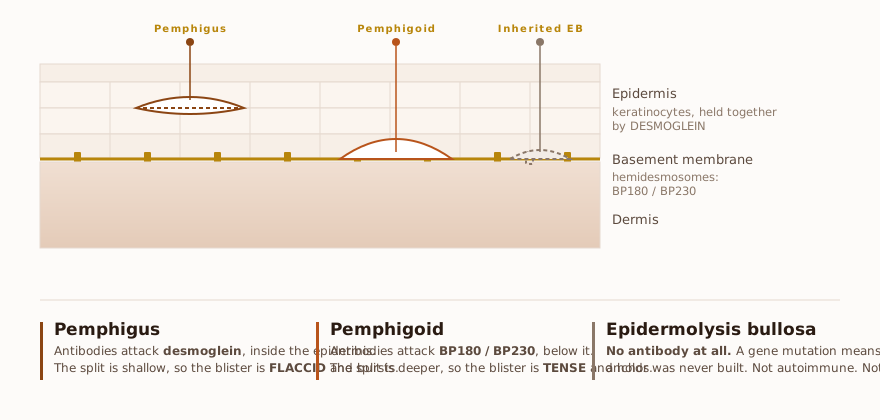
One picture, three diseases: the depth of the split is the whole difference — and it is what your immunofluorescence report is actually reporting.
| Pemphigus | Pemphigoid | Epidermolysis bullosa (inherited) | |
|---|---|---|---|
| What is attacked | Desmoglein — Dsg3 (vulgaris), Dsg1 (foliaceus) | BP180 / BP230 — the hemidesmosomes | Nothing is attacked. A gene builds the protein wrong. |
| Where the skin splits | Inside the epidermis (intraepidermal) | Under the epidermis (subepidermal) | At the level the mutated protein sits |
| The blister | Flaccid. Ruptures almost at once, leaving a raw erosion | Tense. Stays intact, fluid-filled | Fragile; provoked by friction and minor knocks |
| Nikolsky sign | Positive | Usually negative | — |
| Mouth involved? | Vulgaris: usually first, often months before any skin blister. Foliaceus: no | Uncommon in bullous pemphigoid. Routine and scarring in mucous membrane pemphigoid | Depends on subtype; severe forms yes |
| Typical age | Any adult age | Mostly over 70 | From birth |
| The tell nobody mentions | A mouth ulcer that will not heal, for months, with no skin sign at all | Intense itch, months before the first blister — and it is treated as eczema or scabies until then | Blistering in a baby or child, at sites of friction |
| Is it autoimmune? | Yes | Yes | No — it is genetic. Only epidermolysis bullosa acquisita is autoimmune. |
| Can EPOH help? | Supportive, alongside your dermatologist | Supportive, alongside your dermatologist | Not the inherited forms. We do not correct a gene and we will not pretend to. |
The one line to take from this table
The definitive test is a skin biopsy with direct immunofluorescence (DIF). Not a blood test alone, not a look. If you have been treated for months on a diagnosis made by eye, that is the thing to go back and ask for. The antibody the DIF finds is what decides everything else.
Pemphigus Vulgaris
Antibodies against desmoglein 3. Usually starts in the MOUTH — painful erosions that will not heal, often months before any skin blister. Flaccid blisters that rupture into raw areas. The most serious of the pemphigus group.
Read the full page →Pemphigus Foliaceus
Antibodies against desmoglein 1. Superficial, scaly and crusted — scalp, face, chest, upper back. Characteristically SPARES the mouth, which is what separates it from vulgaris.
Read the full page →Bullous Pemphigoid
A DIFFERENT disease from pemphigus, not a variant of it. Antibodies against BP180/BP230 at the basement membrane, so the split is deeper and the blisters are TENSE, not flaccid. Mostly over 70. The intense itch usually arrives months before the first blister — and is very often treated as eczema or scabies until it does.
Read the full page →Pemphigoid (mucous membrane, gestationis)
The wider pemphigoid family. Mucous membrane (cicatricial) pemphigoid SCARS — mouth and eyes — and ocular involvement can threaten sight and is an emergency. Pemphigoid gestationis occurs in pregnancy.
Read the full page →Epidermolysis Bullosa — and why it is not like the others
⚠ Inherited EB is GENETIC, not autoimmune: a mutation means the proteins anchoring your skin were never built correctly. No formulation corrects a gene, and we do not claim to. Only epidermolysis bullosa ACQUISITA (EBA) is autoimmune — and that one does belong in this hub.
Read the full page →Five phases, and the order is the medicine
Blistering disease is an immune system attacking a structural protein. You cannot talk it out of that by treating the blister. The blister is the last thing to appear and the last thing to go.
-
Lowering Inflammatory Load
Weeks 1–8Bring down the systemic inflammatory burden that is keeping the antibody response switched on. Nothing else holds until this does.
-
Internal Healing & Gut Repair
From week 3, overlappingRepair the gut barrier and recalibrate the immune signalling that a leaking barrier keeps provoking. This is where an autoimmune disease is actually argued with.
-
Functional Detox & Immune Balancing
Only once L and I are stableClearance — and never before the two phases above are holding. See the box below.
-
External Care & Local Reversal
AlongsideTopical preparations you apply at home, for the eroded skin itself: barrier, infection risk, and the pain of a raw surface. No procedure. For most patients, no clinic visit.
-
Sustaining Remission
Month 8 onwardHolding the correction, so the disease does not simply return the moment the pressure comes off.
Why the people who “detoxed first” got worse
This is the rule that surprises everyone, and it is not optional. Detox done before the inflammatory load is down and the gut is repairing releases waste faster than the system can clear it — and the condition gets worse. Not slower. Worse.
If you started a cleanse, or a purge, or a detox programme, and your blistering flared, you have probably spent a long time believing that Ayurveda made you worse. It was the sequence, not the approach. The order is not a preference. It is the treatment.
People who were where you are
Documented courses of treatment — what changed, over what timeframe, and what did not. Individual response varies, and these are not a promise.
Bullous Pemphigoid: a Taper-and-Flare Cycle
She did not arrive asking for the blisters to go. She arrived because every attempt to lower the steroid produced a flare worse than the last.
Read this story →Bullous Pemphigoid at 78, a Year of Fluctuation
Everyone treated the blisters. The itch that arrived before them — the earliest warning the disease gave — was the first thing to settle.
Read this story →The clinical background, if you want the detail
Everything below is reference material — what the blistering diseases are, how they differ, and how they are diagnosed and staged. You do not need any of it to start. It is here because some people want to understand the disease properly before they decide anything, and every page links back here.
Which one do you have?
Pemphigus, pemphigoid and epidermolysis bullosa are routinely confused — including in clinic. They sit in different layers of the skin, attack different proteins, behave differently and carry different risks. Start here.
5 pages →Symptoms
What blistering disease actually does — and why the itch that came months before the first blister was the disease, not eczema.
5 pages →Causes
The five internal driver systems, and which of them are generating YOUR blistering. Treatment is built from this, not from the diagnosis alone.
5 pages →Severity
Mucosal involvement, extent, and antibody titre — the measures already on your clinic letter. We do not publish an invented severity score.
Read →Treatment
The EPOH protocol, in sequence, and why the sequence is the medicine. Alongside your dermatologist, never instead of them.
Read →Outcomes
What we measure, when we judge it, and when it is not the right treatment.
Read →FAQ
The questions patients actually ask, answered without marketing.
Read →Research
The clinical reasoning in depth — mechanism, objections, treatment experience and outcomes.
68 articles →Patient stories
Told in the patient’s own words — what living with the condition was like, and what changed.
2 stories →The reasoning, in depth
The clinical argument behind the protocol — mechanism, objections, and what we can and cannot do.
What Your DIF and Immunofluorescence Report Actually Means
Perilesional biopsy, linear IgG, salt-split skin and ELISA titres: what your direct immunofluorescence report actually says about your blistering disease.
Read →Pemphigus vs Pemphigoid: How to Tell Them Apart, and Why It Changes Your Treatment
Pemphigus splits the epidermis from within; pemphigoid lifts it off its base. How to tell them apart, and why the difference decides your treatment.
Read →Why the Itch of Bullous Pemphigoid Comes Months Before the Blisters
In bullous pemphigoid, severe itch can precede blisters by months and is often called eczema or scabies. What is happening, and the test to ask for now.
Read →I Am on Rituximab and Steroids. Can I Start EPOH?
You do not stop rituximab, steroids or any immunosuppressant to start EPOH. How a formulation-based protocol runs alongside the treatment you already have.
Read →Who Responds Best to EPOH for Blistering Disease, and Who Does Not
Who responds to EPOH for pemphigus and pemphigoid, and who we turn away: the honest inclusion and exclusion list, including the cases that need a hospital today.
Read →Your First 90 Days on EPOH for Blistering Disease
The first ninety days of EPOH for pemphigus and pemphigoid, told honestly: what happens, what does not, and why the early weeks look like nothing at all.
Read →The questions patients actually ask
They are different diseases, not variants of one. In pemphigus the antibodies attack desmoglein — a protein INSIDE the epidermis — so the split is shallow, the blisters are flaccid and rupture almost immediately into raw erosions, and the Nikolsky sign is positive. In pemphigoid the antibodies attack BP180 and BP230, the hemidesmosome proteins that anchor the epidermis to the dermis, so the split is deeper, and the blisters are tense and stay intact. Pemphigoid mostly affects people over 70. Pemphigus can begin at any adult age and, in the vulgaris form, usually starts in the mouth. The distinction is made on a biopsy with direct immunofluorescence, and it changes what treatment has to prioritise.
No, and this matters more than anything else on this page. Inherited epidermolysis bullosa is GENETIC — a mutation means the proteins that anchor your skin were never built correctly. It is not an autoimmune disease, and no formulation, Ayurvedic or otherwise, corrects a gene. We do not claim to. The only exception is epidermolysis bullosa ACQUISITA, which is autoimmune and does belong in this group. If nobody has told you which of the two you have, that is the first question to ask your dermatologist.
No — not in Ayurveda, and not in conventional medicine. What is realistic is sustained remission: the disease becoming quiet, and staying quiet, for as long as the internal drivers that generate it stay corrected. That is a realistic goal for many patients — but not for all. We do not promise a cure, and we would rather tell you that before you begin than after.
No, and you must not. Sudden withdrawal of systemic steroids is dangerous, and in a blistering disease it can precipitate a severe flare. Everything you have been prescribed continues. Any reduction is a decision for the doctor who prescribed it, made on the evidence of your own disease activity — never ours, and never yours alone. What we work toward is a disease that is quiet enough that YOUR dermatologist chooses to taper.
There is no fixed timeline, and anyone who gives you one is guessing. The first 4 to 8 weeks are internal work — lowering inflammatory load and repairing the gut barrier — and visible change on the skin is NOT expected during them. Between months 2 and 4 the disease itself should begin to change: fewer new blisters, faster healing of the ones you have, less pain. Stable remission is assessed from month 8 onward. If nothing has moved by month 4, this is not working for you, and we will say so.
For most patients there is no procedure, no in-clinic therapy and no clinic visit. EPOH is entirely formulation-based — oral compounds and topical preparations, compounded to your individual driver profile and couriered to you. You take them at home. That is not a convenience; on raw, eroded, easily-infected skin it is a clinical advantage.
Because the formulation is compounded to your individual driver profile, and naming a constituent invites you to buy it and take it on its own — which is not the treatment and can be actively unsafe alongside immunosuppression. We reference the formulation CATEGORY and the EPOH phase it belongs to. Anything you take is reviewed against the medication you are already on.
Yes, and it is urgent. Mucous membrane (cicatricial) pemphigoid can scar the conjunctiva and threaten sight, and it will not wait. If you have eye involvement — grittiness, redness, scarring, lashes turning inward — you need an ophthalmologist now, alongside your dermatologist. This is not the place to start with supportive care, and we will tell you that.
There is no clinic visit. At any stage.
EPOH is entirely formulation-based — oral compounds and topical preparations, compounded to your individual driver profile and couriered to you. On skin that is raw, eroded and easily infected, not having to travel to a clinic is not a convenience. It is a clinical advantage.
- Consultation Online, wherever you are. Your biopsy and DIF report are read before anything is prescribed.
- Formulations Compounded to your profile and dispatched. Nothing off a shelf.
- Your dermatologist stays We work alongside them. We never ask you to stop what they prescribed.
- Review Against what we said we would measure — not against a feeling.
No procedure, no in-clinic therapy and no clinic visit is required — for most patients. If a treatment plan for a blistering disease requires you to sit in a waiting room with open erosions, ask why.
With you,
throughout your treatment journey

Easy Appointments avaliable Online & Offline with the Best Ayurveda Experts in India

Evidence-based Approach for Progressive Health with Dedicated 1:1 Support

Medicines Delivered to your door-step Worldwide Hassle-Free

Structured, AYUSH Vetted Root Level Treatments for Rebalanced Cellular & Metabolic Conditioning

Personalised for Changes on a Deeper Level that will have a Long-Lasting Impact on your Health
Start with your biopsy report
Bring your DIF result. It tells us which disease you have, which is the only honest place to start — and it is the first thing we read.
Online consultation. Formulations couriered. No clinic visit for most patients.
Our Pemphigus
Treatment Highlights
Understand the Approach that Makes Us the Most Successful Ayurveda Center for Pemphigus Treatment
We strive to enhance the quality of medicines to give you the holistic benefit of latest in treatment knowledge and optimally potent herbal medicines.
Medical disclaimer. This page is general clinical information, not personalised medical advice. Individual response varies with disease duration, degree of involvement and remaining biological repair capacity — not every patient reaches the same outcome. No medication should be started, stopped or altered without consulting your treating physician.
EliteAyurveda™ in Numbers
28,000+
Patients Treated
Among World's leading experts on Ayurveda treatment with over 28k+ patients treated worldwide
30+
Years Experience
Our doctors have combined treatment experience that surpasses 30+ Years
Remote
First, In-Clinic Where Needed
Formulations are compounded to your profile and dispatched by courier. Consultations by video or WhatsApp. No clinic visit is required — for most patients.
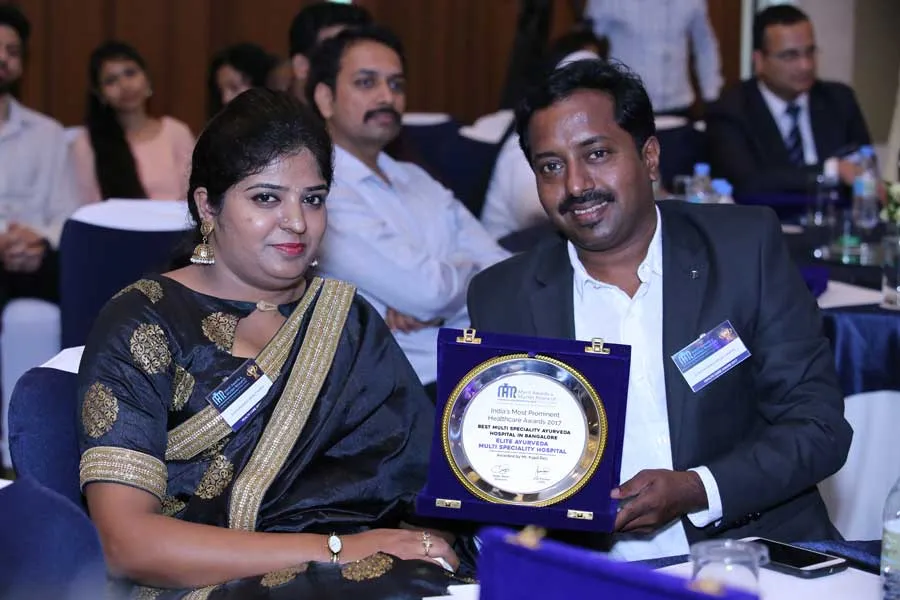
Trust of Authentic Ayurveda - Awards & Recognition





Talk to Us Directly
No forms. Message or call the clinic and a doctor’s team member will take your history.
Replies during clinic hours, Mon–Sat.