


Menopause Support
Part of the Metabolic, Endocrine & Women’s Disorders Centre
Menopause is not a condition to be cured. Where the symptoms are disabling, though, they are treatable — and worth treating.
What we hear most often
Often the sleep goes first. Then temperature regulation, mood, and a weight change that does not respond to what used to work.
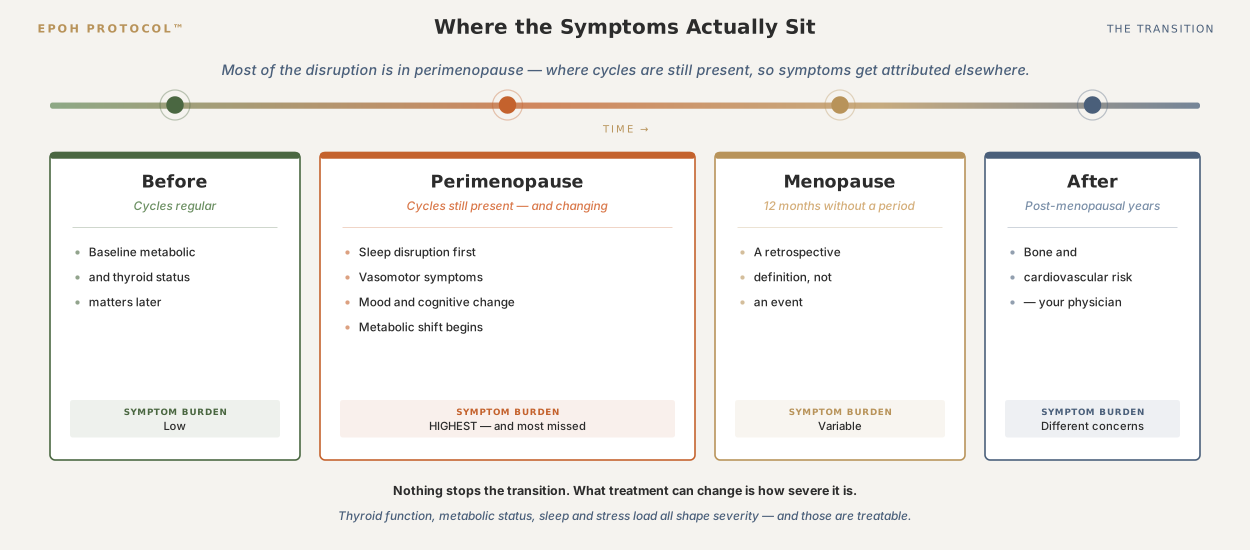
Periods may still be arriving, which is why the connection is so often missed — perimenopause is where most of the disruption sits.
Somewhere in there, most women are told this is simply what happens.
It is what happens. The severity of it is not fixed, and there is no reason to go through it unsupported.
The questions women ask us most
Answered plainly, including where the honest answer is “not always”.
Can Ayurveda actually help with menopause?
What is treatable here is severity, not the transition itself.
Read the answer →How does this fit with the rest of women’s health?
Menstrual disorders and menopause are not separate stories.
Read the answer →Why is mine worse than other people’s?
Thyroid and metabolic status, sleep and inflammatory load shape severity. Those are what treatment can work on.
Read the answer →What is actually happening
Ovarian hormonal output falls, and every system that was calibrated to it recalibrates — unevenly, and over years rather than months. That unevenness is the part nobody warns about: symptoms come and go, which makes them easy to attribute to something else.
Perimenopause is where most of the disruption sits, and where it is most often missed. Cycles are still present, so sleep disruption, mood change, temperature dysregulation and a metabolic shift get put down to stress, work, or age generally. Menopause itself is a retrospective definition — twelve months without a period — not an event you feel arrive.
Why it is worse for some people
Severity varies enormously and it is not random. Four things consistently shape how hard the transition is, and all four are assessable.
Thyroid function. Hypothyroidism produces fatigue, weight change and mood symptoms that overlap almost exactly with perimenopause, and it is frequently attributed to it. Untreated, it makes everything worse and is easy to identify.
Metabolic status. Insulin resistance and the visceral weight shift that accompanies the transition feed vasomotor symptoms rather than merely coinciding with them.
Sleep. Night-time vasomotor symptoms fragment sleep; fragmented sleep worsens mood, cognition and glucose handling. It is a loop, and it is the one most worth interrupting first because everything else improves when it does.
Stress load and pre-existing inflammatory conditions. Both raise the baseline the transition is happening on top of.
| Factor | Why it makes the transition harder | Treatable? |
|---|---|---|
| Thyroid function | Symptoms overlap almost exactly with perimenopause and get attributed to it | Yes — and corrected first |
| Insulin resistance | Feeds vasomotor symptoms rather than merely coinciding with them | Yes, over months |
| Sleep fragmentation | Worsens mood, cognition and glucose handling — a self-feeding loop | Yes, and usually first |
| Stress and inflammatory load | Raises the baseline the transition happens on top of | Partly |
| The hormonal transition itself | This is the physiology, not a fault | No — this part is physiology |
How we approach it
Menopause is a physiological transition that everyone who menstruates goes through, not a disease, and the goal is not to reverse it.
Equally, it is not something to be endured. “This is just what happens” is true and unhelpful in equal measure — the transition is normal, the severity of it is not, and disabling symptoms are treatable.
And it is not an argument against hormone replacement therapy. We are not an alternative to HRT, we will not advise you to stop it, and where it is appropriate that is a conversation with your treating physician.
How we approach it
Assessment covers what determines severity rather than what defines the transition: thyroid function, metabolic and insulin picture, sleep quality and continuity, digestion, inflammatory load, and the actual symptom pattern — which symptoms, how often, and what they are preventing.
Treatment works on those. Where the thyroid is involved, that is corrected first because nothing else holds while it is not. Where sleep is the loop, that is where the first work goes. Formulations are oral and compounded to the picture found, and the dietary and activity guidance alongside them is specific to the driver rather than a generic midlife list.
Honest limits
Nothing stops the transition.
What is achievable is a reduction in the severity of the symptoms interfering with your life, and correction of the thyroid and metabolic factors making them worse. That is a smaller claim than “natural menopause relief” and a considerably more honest one.
Bone density and cardiovascular risk after menopause are matters for your physician, need monitoring, and should not be managed on this basis alone. If that is your main concern, it is the wrong reason to come here.
| What changes | When it typically moves | Why |
|---|---|---|
| Sleep continuity | Weeks 3–8 | Usually the first loop to interrupt |
| Energy and mood | Weeks 6–12 | Follows sleep more than anything else |
| Vasomotor symptoms | Months 2–5 | Track metabolic and thyroid correction |
| Weight and metabolic trend | Months 3–8 | Slowest, and never independent of the rest |
| The transition itself | Not at all | It is physiological. Severity is the target, not the process |
What we measure, and when we judge it
Menopause is judged on symptom burden — how much of your day and night this actually takes — rather than on a hormone panel. We track that from your first consultation and review it at every follow-up, against the timeline set out below.
Symptom burden, not hormone levels
Vasomotor symptom frequency and severity. Sleep quality and continuity. Mood and cognitive complaints. Weight and metabolic trend. Thyroid status where involved.
We do not treat to a hormone number. The measure is whether the symptoms are still interfering with your life.
Six to twelve weeks for sleep, longer for the rest
Sleep and energy typically shift first. Vasomotor symptoms and metabolic change take longer. If nothing has moved by around three months, the plan should be reconsidered rather than extended.
Where we fit
Nothing stops the transition itself, and we are not an alternative to hormone replacement therapy — if HRT is appropriate for you that is a conversation with your treating physician, and we will not advise you to stop it. Bone and cardiovascular risk after menopause is a matter for your physician and should not be managed on this basis alone.

Talk to Us Directly
No forms. Message or call the clinic and a doctor’s team member will take your history.
Replies during clinic hours, Mon–Sat.