


Vulvodynia Treatment
Part of the Metabolic, Endocrine & Women’s Disorders Centre
Persistent vulval pain with nothing to find on examination is real, common, and routinely dismissed. The absence of a visible cause is part of the definition, not evidence that nothing is wrong.
If this is your experience, you are not imagining it
The pain is real, it has lasted months or years, and the examinations keep coming back normal.
There have usually been several courses of treatment for infection, none of which made a lasting difference.
Normal results can feel like a dead end, particularly when they arrive without an explanation of what they do and do not rule out.
A normal examination is consistent with this diagnosis rather than contradicting it. The absence of something to see is part of the definition.
What vulvodynia is
Vulval pain persisting three months or longer, without an identifiable cause on examination or testing. It may be provoked — triggered by contact, intercourse, tampon use or sitting — or unprovoked and present at rest. It may be localised to one area, often the vestibule, or generalised across the vulva.
Those distinctions are not academic. Provoked and unprovoked pain behave differently, respond differently, and are worth naming precisely when you describe it to anyone.
| Distinction | What it means | Why it matters |
|---|---|---|
| Provoked | Triggered by contact, intercourse, tampon use or sitting | Points toward vestibular involvement and pelvic floor contribution |
| Unprovoked | Present at rest, without a trigger | More often has a neuropathic component |
| Localised | Confined to one area, frequently the vestibule | Narrows what is worth examining and treating |
| Generalised | Across the vulva, sometimes shifting | Broader driver picture; less likely to be purely local |
Why it takes years to reach
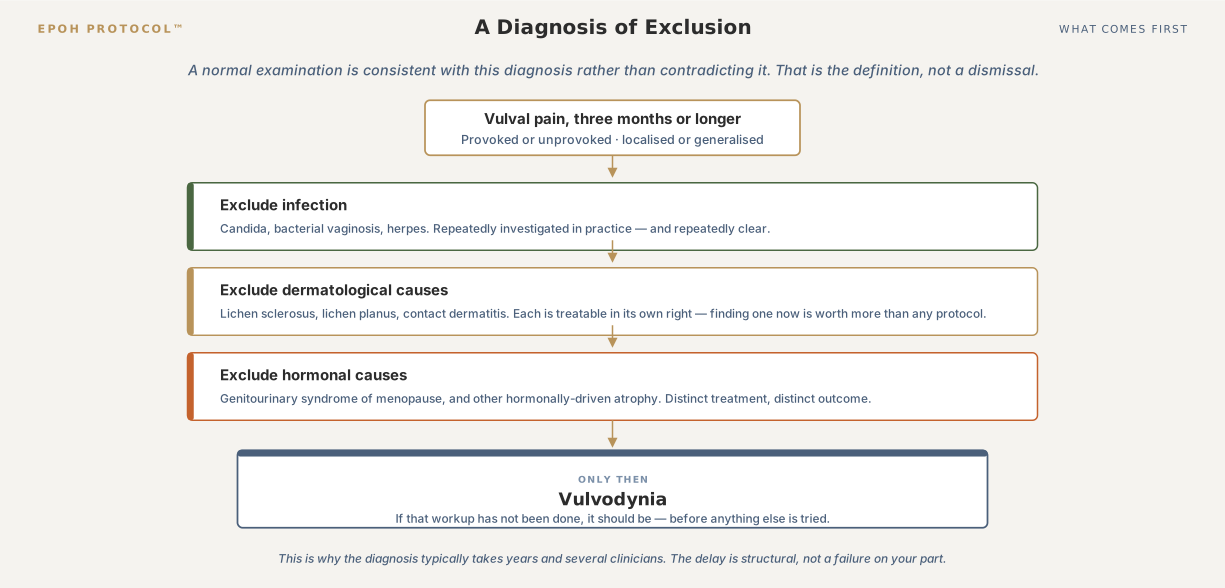
It is a diagnosis of exclusion, which means everything else has to be ruled out first — and each of those exclusions is a separate appointment, often with a separate clinician who did not see the previous result.
Infection is investigated first and usually repeatedly. Dermatological causes — lichen planus, lichen sclerosus, contact dermatitis — come next, and each is treatable in its own right, which is why finding one is a better outcome than the vulvodynia label. Hormonal causes are third.
The delay is structural rather than anyone's failure, but it is spent by you.
Why it gets dismissed
Because there is nothing to see. Patients are commonly told the examination is normal, with the implication left hanging that the pain therefore is not.
A normal examination is consistent with this diagnosis rather than contradicting it. The absence of a visible cause is part of the definition. Being investigated repeatedly for infection you do not have is not evidence that nothing is wrong; it is evidence that the wrong thing was looked for.
How we approach it
The first requirement is a proper diagnostic workup, and if that has not been done then it should be, before anything else is attempted. A treatable dermatological or hormonal cause found now is worth more than any protocol we could offer.
Where those have been excluded, our approach is the same as everywhere else on this site: identify which drivers are present in your case — inflammatory load, hormonal status, pelvic floor and nervous-system involvement — and treat those rather than the pain in isolation.
Assessment is by video consultation. There is no examination requirement here, which for this condition specifically is worth saying: you have likely been examined enough.
| Excluded first | Because |
|---|---|
| Infection | Repeatedly investigated in practice, and repeatedly clear — the tests are not the problem |
| Lichen sclerosus and lichen planus | Treatable in their own right; finding one is a better outcome than the vulvodynia label |
| Contact dermatitis | Frequently caused by something being used to treat the pain |
| Hormonal causes | Genitourinary syndrome of menopause has distinct treatment and distinct outcome |
| Pelvic floor dysfunction | Not an exclusion but a contributor — needs physiotherapy alongside anything else |
Working with your wider team
Vulvodynia responds best to combined care — pelvic floor physiotherapy and pain management in particular. We work alongside that rather than in place of it.
If you are not already seeing someone for the pelvic floor component, that is worth arranging whatever you decide about us. This page sets out how we would assess and approach it, so you can judge early whether it fits what you need.
What we measure, and when we judge it
Vulvodynia is judged on pain, on what it stops you doing, and on sleep — the things that decide whether a day is liveable. Those are what we would track from your first consultation, alongside whatever your wider care team is already measuring.
Pain, function, and what provokes it
Pain severity and pattern. Whether it is provoked or unprovoked. What activities it prevents — sitting, intercourse, exercise. Sleep, because chronic pain and sleep degrade each other.
A proper diagnostic workup
Infection, dermatological causes such as lichen planus or lichen sclerosus, and hormonal causes all have to be excluded, and they are treatable in their own right. If that workup has not been done, it should be, and a cause found now is worth more than any protocol.
We work with your wider team
Vulvodynia often responds best to combined care, including pelvic floor physiotherapy and pain management. Where that is already helping, we work alongside it rather than in place of it.

Talk to Us Directly
No forms. Message or call the clinic and a doctor’s team member will take your history.
Replies during clinic hours, Mon–Sat.