


Axillary HS Caught Earlier in Its Course
Part of the Hidradenitis & Recurrent Skin Disorders Centre
Two years is a comparatively short history for HS to have reached the point of Hurley Stage II — recurrent inflammatory lesions and drainage severe enough to restrict arm movement and meaningfully affect daily life. Prior antibiotic courses and incision-and-drainage had already been tried without lasting control by the time she presented, which is a common pattern regardless of how long the disease has been active: local treatment of the lesion rarely holds if the underlying activity generating it hasn't changed.
What was recorded, visit by visit
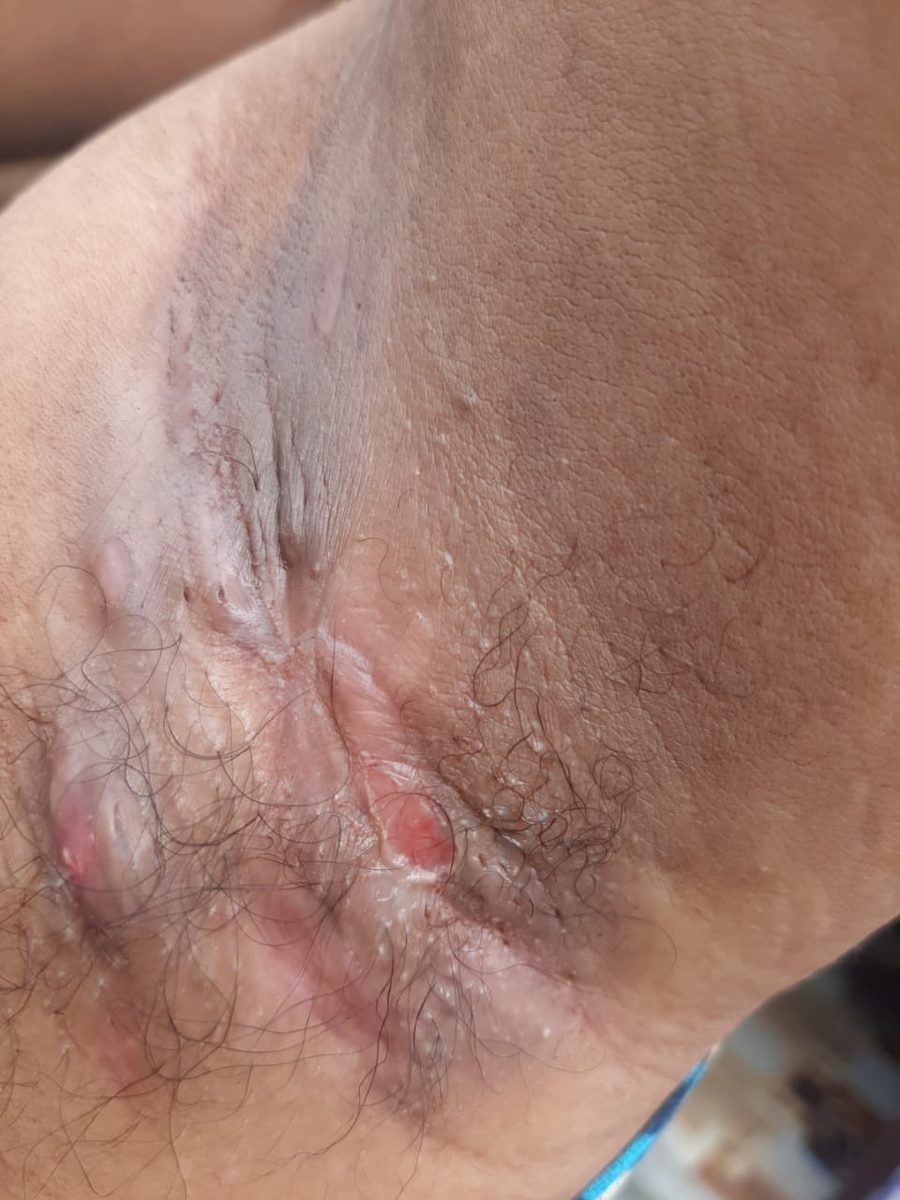
Active inflammatory lesions in the left axilla with drainage and restricted range of motion.
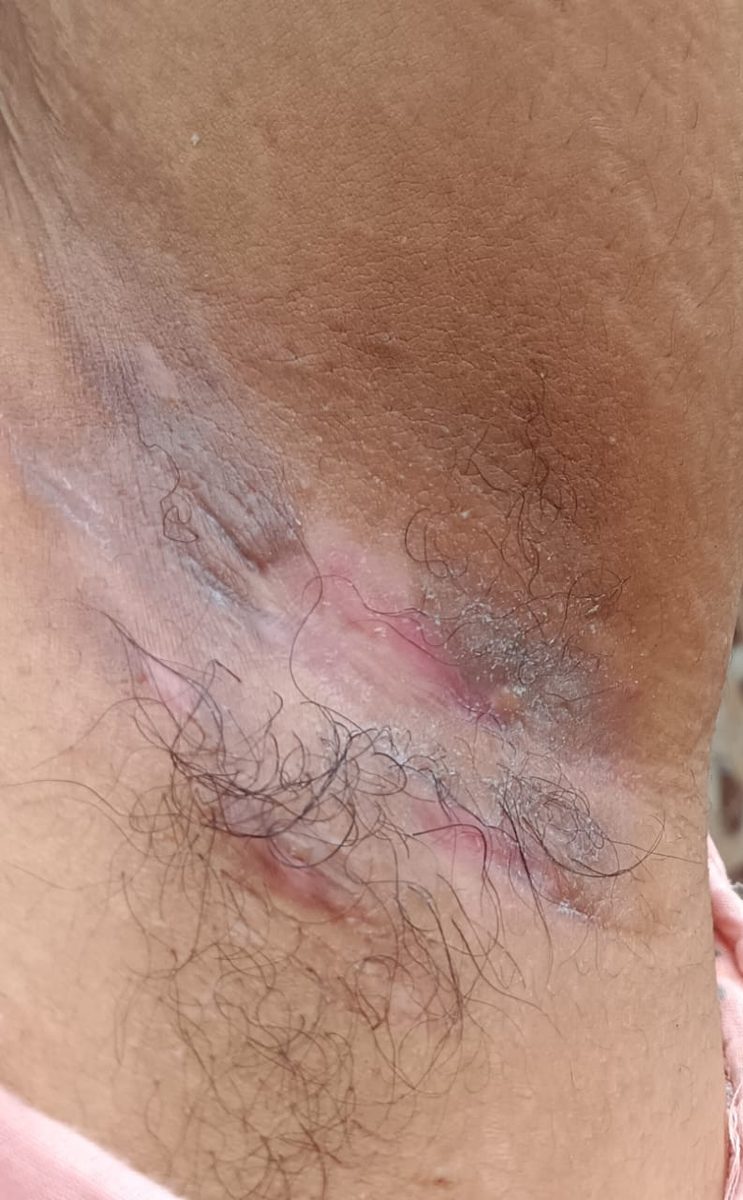
No active lesions or drainage documented; movement returned to normal.
Baseline vs. final assessment
Outcome measures
Baseline vs. Month 3
| Measure | Baseline | Month 3 |
|---|---|---|
| Pain (VAS) | 7/10 | 0/10 |
| Active lesions | 2 | 0 |
| Drainage score | 4 | 0 |
| Range of motion | Restricted | Normal |
| Quality of life | Impaired | Markedly improved |
Status: The documented criteria for clinical remission were met at the three-month assessment — pain fully resolved, no active lesions or drainage, and range of motion back to normal. A shorter disease history doesn't guarantee a faster response in every case, but it is generally associated with less accumulated structural change to reverse.
Axillary (underarm) HS
Earlier-stage axillary HS — fewer lesions, no established tunnelling yet — is exactly where diagnosis is most often missed or delayed, because it can look indistinguishable from a recurring boil or folliculitis on the surface. The distinguishing feature is the pattern: same site, recurring over months to years, in a fold prone to friction and moisture. Getting an accurate read on stage and pattern early matters, because it changes what a realistic timeline looks like — earlier presentation generally has more disease-course options open to it than disease that's already tunnelled.
What this is, and is not. This is one individually documented case with dated follow-up — not a controlled clinical trial, and not a claim about what any other patient should expect. Outcome measures are the patient’s own reported or observed values at each visit, recorded at the time. Your presentation, severity and disease pattern may differ; your care plan should be individualised accordingly.
Explore other presentations
Have a presentation like this?
Book a Consultation
Talk to Us Directly
No forms. Message or call the clinic and a doctor’s team member will take your history.
Replies during clinic hours, Mon–Sat.