


HS Staging — Where Are You Now?
Part of the Hidradenitis & Recurrent Skin Disorders Centre
Two staging systems, and they are not the same thing
Patients — and, honestly, a lot of content — conflate these constantly. They measure different things, and you can sit at different points on each at the same time.
- EPOH-DSS measures disease severity: where your HS is now.
- Recovery Stage measures treatment response: how you are progressing.
You can be EPOH-DSS Stage 3 and Recovery Stage 2 simultaneously. Never read a bare "Stage 2" anywhere — including here — without checking which system it belongs to.
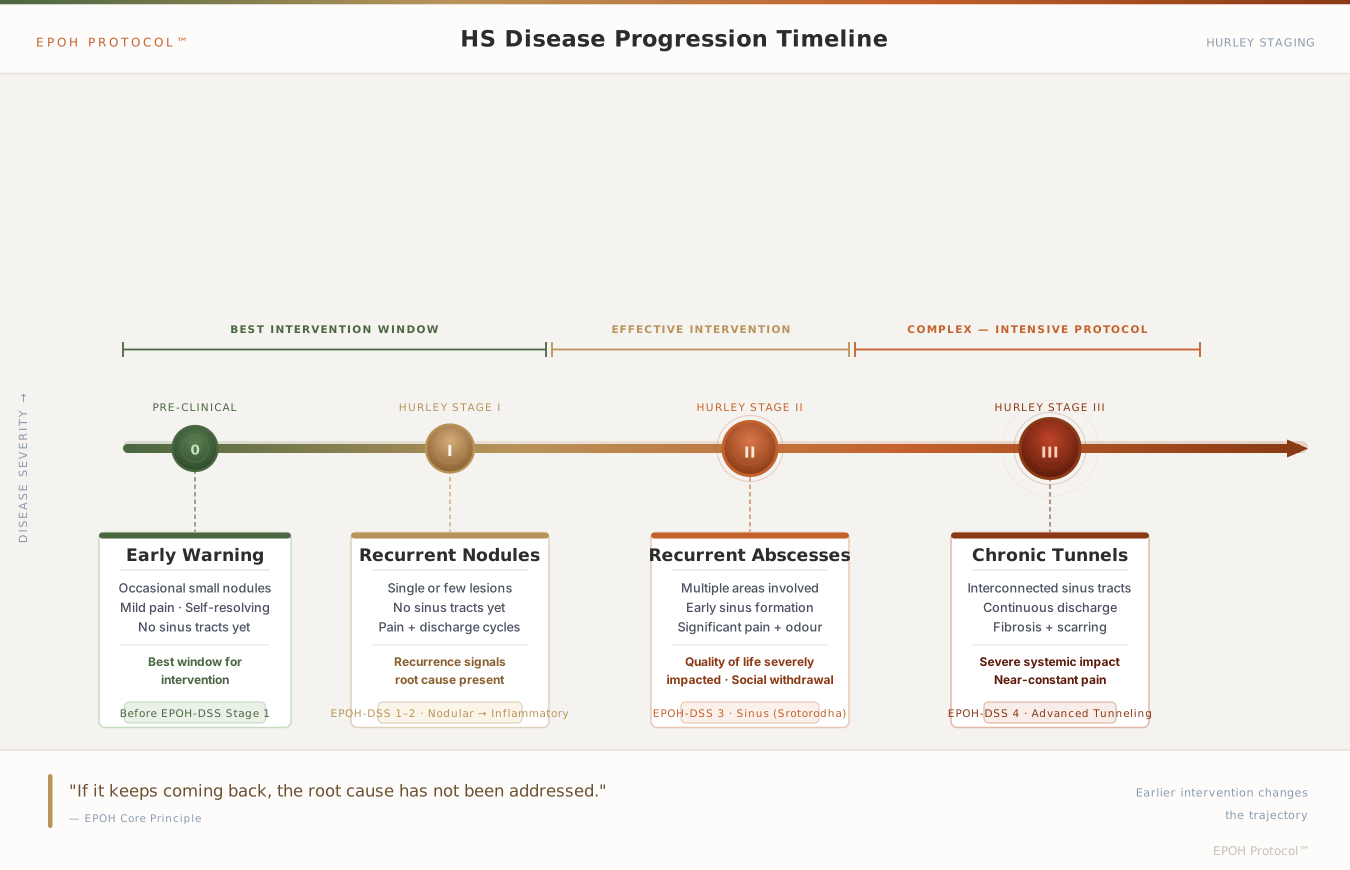
EPOH-DSS — disease severity
| Stage | Name | What it looks like |
|---|---|---|
| 1 | Early Nodular | Isolated, painful nodules. No tracts, no scarring. Responds most completely. |
| 2 | Inflammatory | Recurrent nodules and abscesses, more than one site, early scarring. |
| 3 | Sinus | Sinus tracts have formed. The disease is becoming architectural, not just episodic. |
| 4 | Advanced Tunneling | Interconnected tunnels, extensive scarring, restricted movement. |
Mapped to Hurley, which is what your dermatologist told you and what you searched for: EPOH-DSS 1 ≈ Hurley I · EPOH-DSS 2 ≈ Hurley I–II · EPOH-DSS 3 ≈ Hurley II · EPOH-DSS 4 ≈ Hurley III.
Recovery Stages — treatment response
| Recovery Stage | Timeline | What you experience |
|---|---|---|
| 1 — Internal Shift | Weeks 1–4 | Digestion, sleep and energy improve. Your skin may not have changed yet. This IS progress. |
| 2 — Reduced Frequency | Months 2–4 | Flares are less frequent, shorter, and resolve more completely. |
| 3 — Reduced Severity | Months 4–8 | The same triggers produce a diminished response. Medication-reduction conversations become appropriate. |
| 4 — Stable Remission | Months 8+ | Extended periods without active disease. Monitoring replaces management. |
The Partial Improvement Plateau — weeks 3 to 6
Around week three, many patients improve a little and then stop improving. It feels like the treatment has stalled.
It has not. It is the signal that Phase 1 has done its work and Phase 2 should begin — the load has come down as far as lowering the load can bring it, and the barrier repair has not started yet.
We tell you this before you begin, because this is the point at which patients quit something that is working. If you know it is coming, it is a milestone. If you do not, it looks like the end.
Honest candidacy — what may not reverse
Earlier and less structural disease responds more completely. That is not a reason for despair if yours is advanced — internal correction remains the most effective path available to you — but it is a reason for us to be precise with you.
Established sinus tracts and dense scarring are structural. Inflammation is a process and processes can be stopped and reversed; scar is tissue, and it does not un-form. Patients with extensive EPOH-DSS Stage 4 disease may not achieve full remission. For them the realistic goal is a substantially lower inflammatory burden and a lower medication load — which is worth having, and which is not the same thing as remission.
We would rather say this before you pay us than after.
Medical disclaimer. This page is general clinical information, not personalised medical advice. Individual response varies with disease duration, degree of involvement and remaining biological repair capacity — not every patient reaches the same outcome. No medication should be started, stopped or altered without consulting your treating physician.
Speak to a specialist about your HS
A consultation assesses your driver profile and what root-cause correction can realistically achieve in your case. If we do not think we can help you, we will tell you.
Consultations by video or WhatsApp. Personalised formulations couriered to your door, in India and internationally. Remote first, with in-clinic intensives where the disease needs them. How treatment works →

Talk to Us Directly
No forms. Message or call the clinic and a doctor’s team member will take your history.
Replies during clinic hours, Mon–Sat.