


Severe Axillary HS, Documented to Remission
Part of the Hidradenitis & Recurrent Skin Disorders Centre
Seven years of axillary disease had progressed to Hurley Stage III by the time this patient presented — active inflammatory nodules, draining sinus tracts, established scar tissue, and pain that had become part of daily life. Multiple rounds of antibiotics and incision-and-drainage had failed to hold the disease back for long, and the patient came in with restricted shoulder movement and a quality of life he described as moderately impaired. Stage III is the most advanced Hurley classification, meaning interconnected tunnels and diffuse scarring rather than isolated lesions — it's usually the hardest pattern to shift, which makes the documented course here worth showing in full rather than only the endpoint.
What was recorded, visit by visit
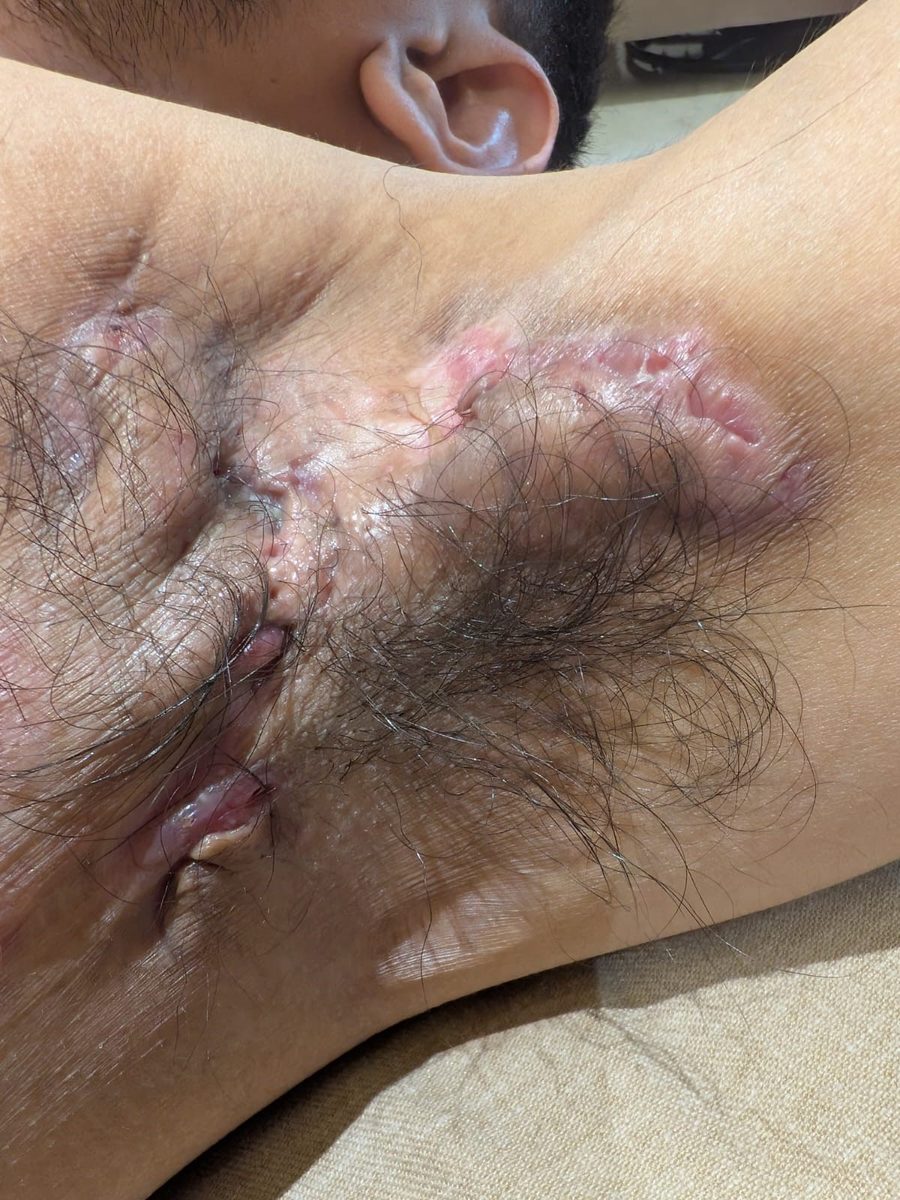
Inflammatory nodules, active sinus tract openings, drainage, and chronic scar formation consistent with Hurley Stage III.
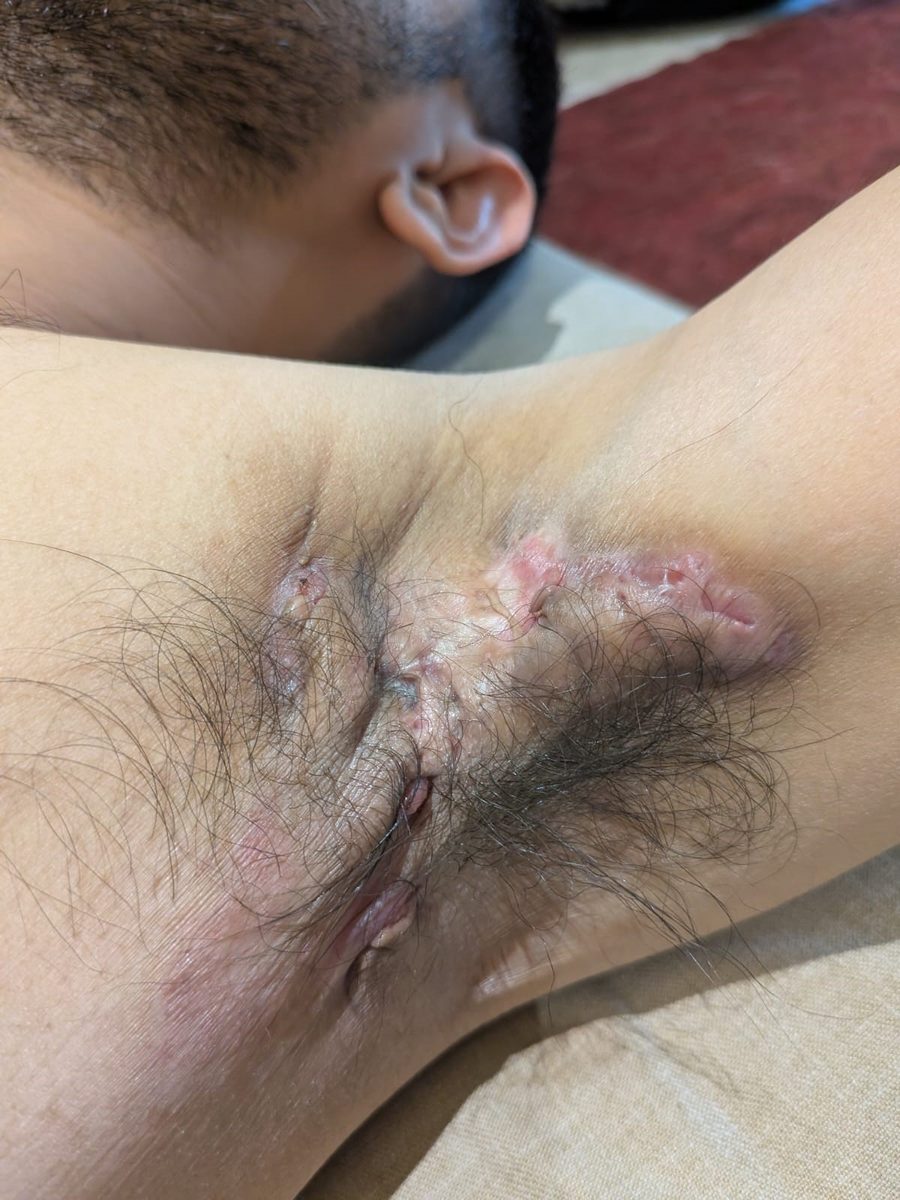
Reduced inflammatory burden, with some residual disease activity and tissue recovery underway.
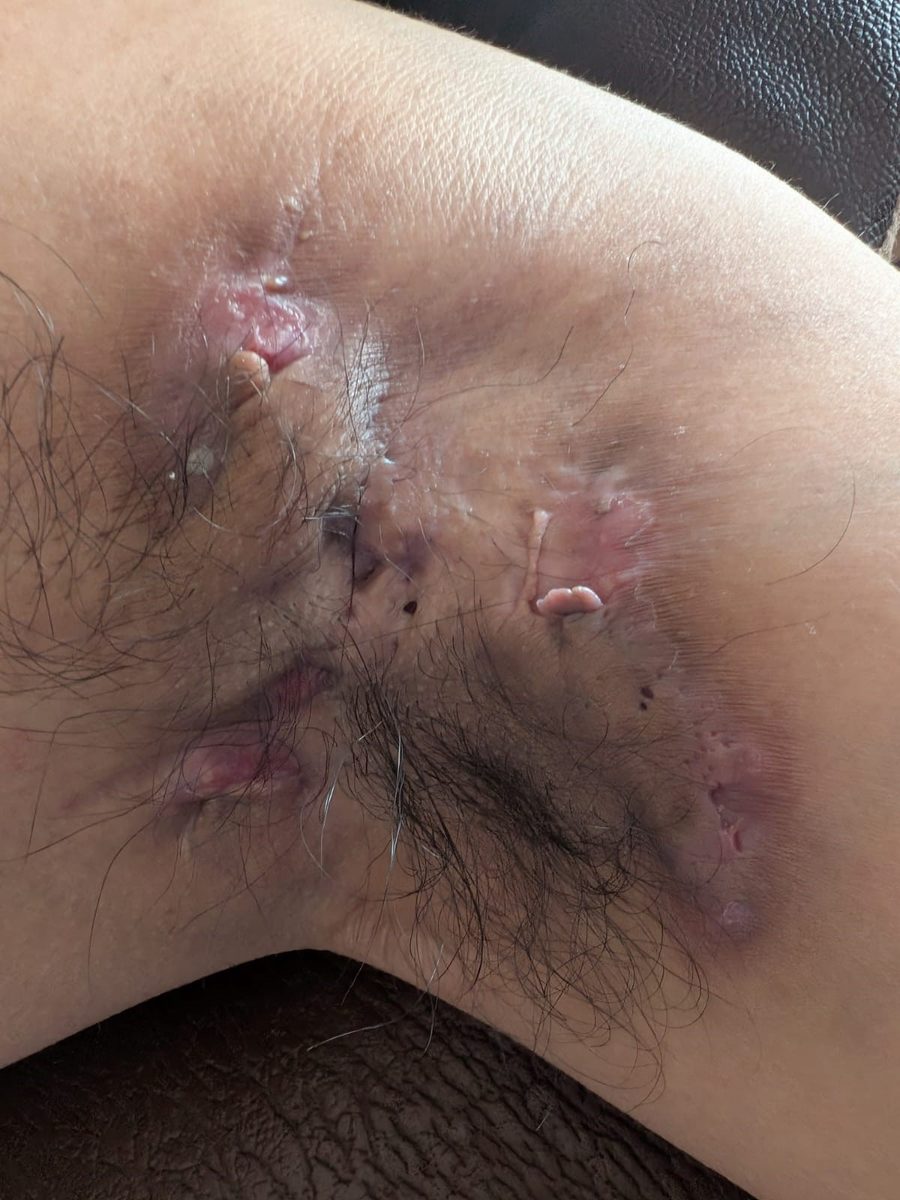
Continued reduction in lesion burden, improved tissue stability, and progressive scar maturation.
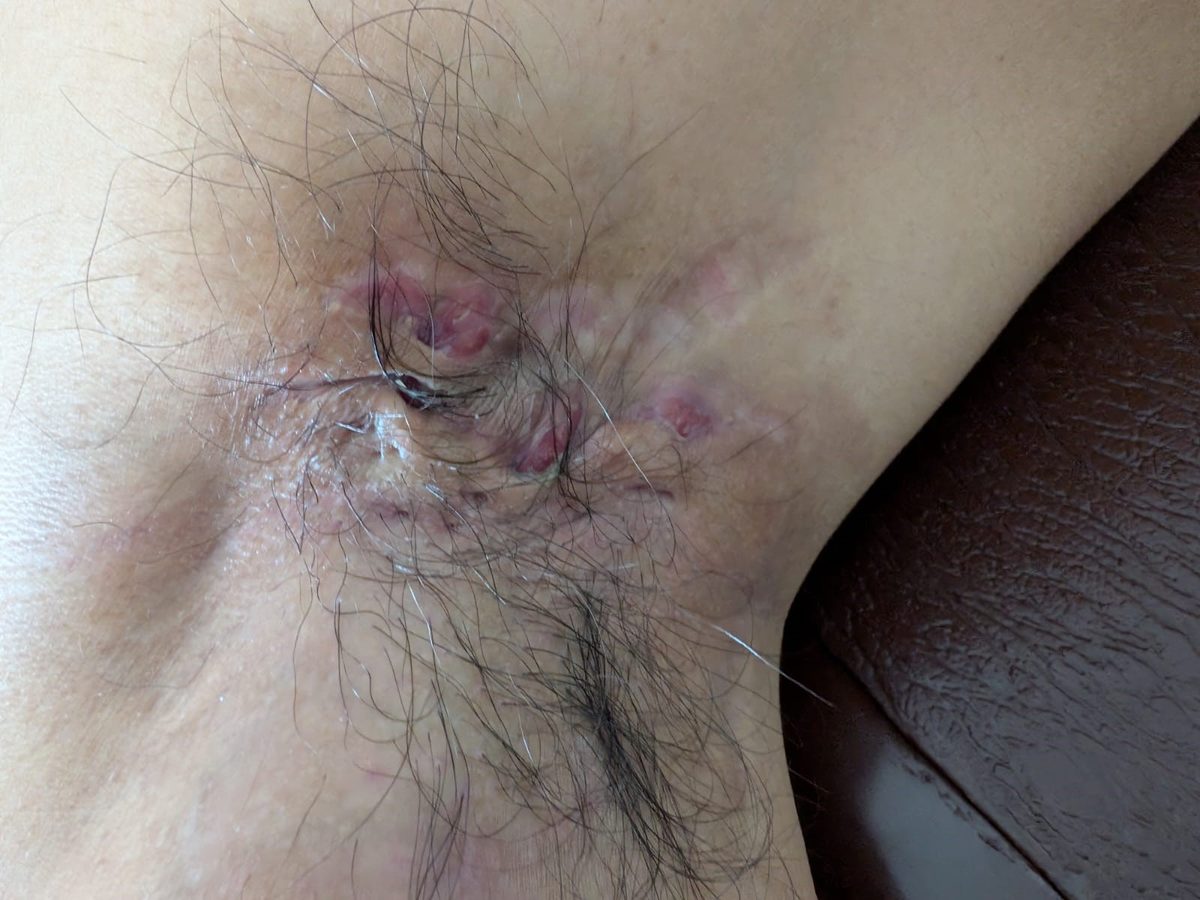
No active inflammatory lesions or drainage identified. Predominantly residual scar tissue remained visible.
Baseline vs. final assessment
Outcome measures
Baseline vs. Month 9
| Measure | Baseline | Month 9 |
|---|---|---|
| Pain (VAS) | 6/10 | 0/10 |
| Active lesions | 2–4 | 0 |
| Drainage score | 4 | 0 |
| Range of motion | Restricted | Normal |
| Quality of life | Moderately impaired | Markedly improved |
Status: At Month 9 the documented criteria for clinical remission were met — no active nodules, no abscesses, no drainage, no active sinus tracts, and no evidence of ongoing inflammatory activity. Shoulder mobility returned to normal. This is one Stage III case, not a promise of what Stage III disease will always do; the duration and tunnelling involved make this a slower, harder pattern to shift than earlier-stage disease, and outcomes vary by how much structural change has already occurred.
Axillary (underarm) HS
Hurley Stage III is defined by multiple interconnected sinus tracts and abscesses across an area, with diffuse scarring — a meaningfully different (and harder) problem than isolated nodules, because the tunnelling itself keeps re-seeding inflammation even between visible flares. Surgical drainage in this pattern tends to be a repeat event rather than a resolution, since it addresses the current tunnel without changing what's producing new ones. The EPOH protocol's longer timeline for advanced disease reflects that reality — Stage III cases are told upfront that response, when it comes, tends to be slower and more gradual than in earlier-stage disease.
What this is, and is not. This is one individually documented case with dated follow-up — not a controlled clinical trial, and not a claim about what any other patient should expect. Outcome measures are the patient’s own reported or observed values at each visit, recorded at the time. Your presentation, severity and disease pattern may differ; your care plan should be individualised accordingly.
Explore other presentations
Have a presentation like this?
Book a Consultation
Talk to Us Directly
No forms. Message or call the clinic and a doctor’s team member will take your history.
Replies during clinic hours, Mon–Sat.