


Axillary HS With a Single Long-Standing Lesion
Part of the Hidradenitis & Recurrent Skin Disorders Centre
This patient's disease had been present for eight years but stayed confined to a single axillary site — one recurring lesion that opened, drained and partly closed on a cycle he'd lived with for most of a decade. That's a distinct pattern from the multi-site cases elsewhere in this collection: a long history doesn't always mean many lesions. It can mean one stubborn site that never fully resolves between flares. At baseline the lesion was active with drainage, restricted shoulder movement on that side, and pain he rated 8 out of 10. Repeated antibiotic courses and incision-and-drainage procedures over the years had brought temporary relief but never lasting closure.
What was recorded, visit by visit
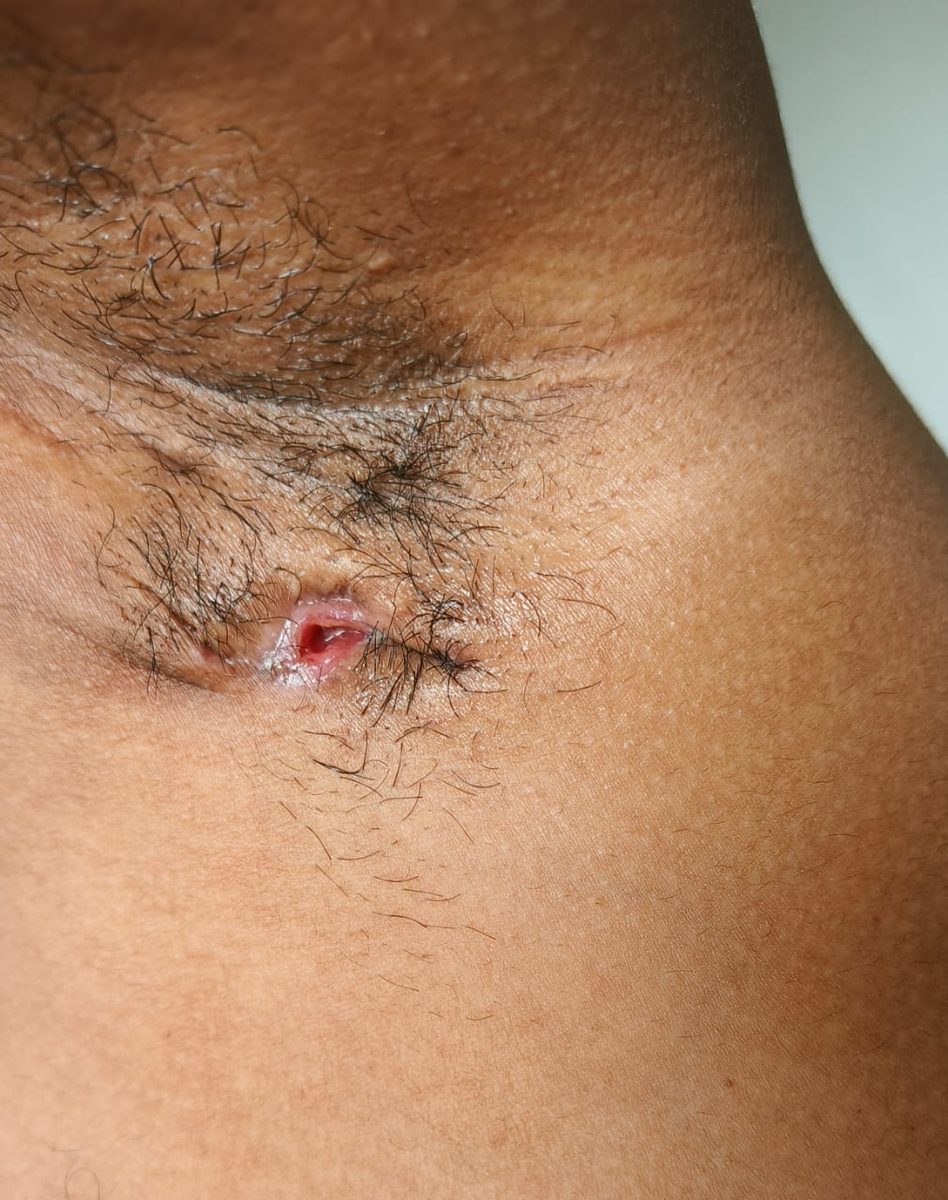
The active lesion opening, with surrounding inflammatory and scar-related tissue change from years of recurrence.
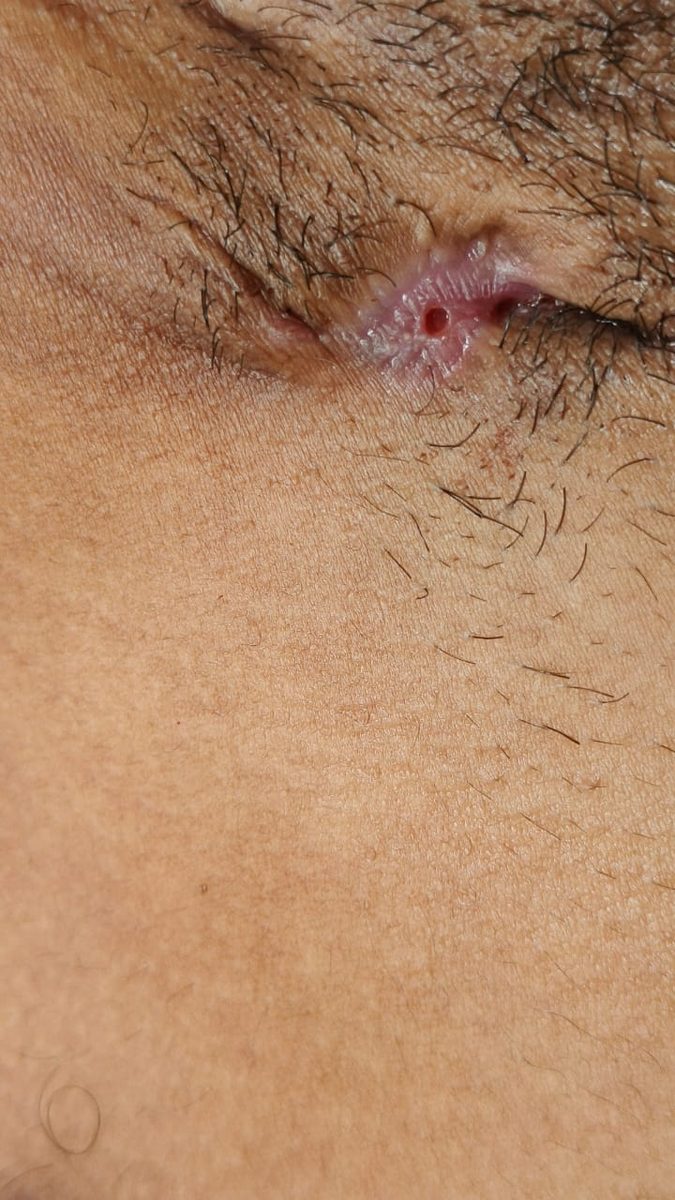
Persistent opening, but the first documented signs of tissue healing beginning around it.

Visible lesion burden reduced; a focal opening remained, consistent with ongoing healing rather than complete closure yet.
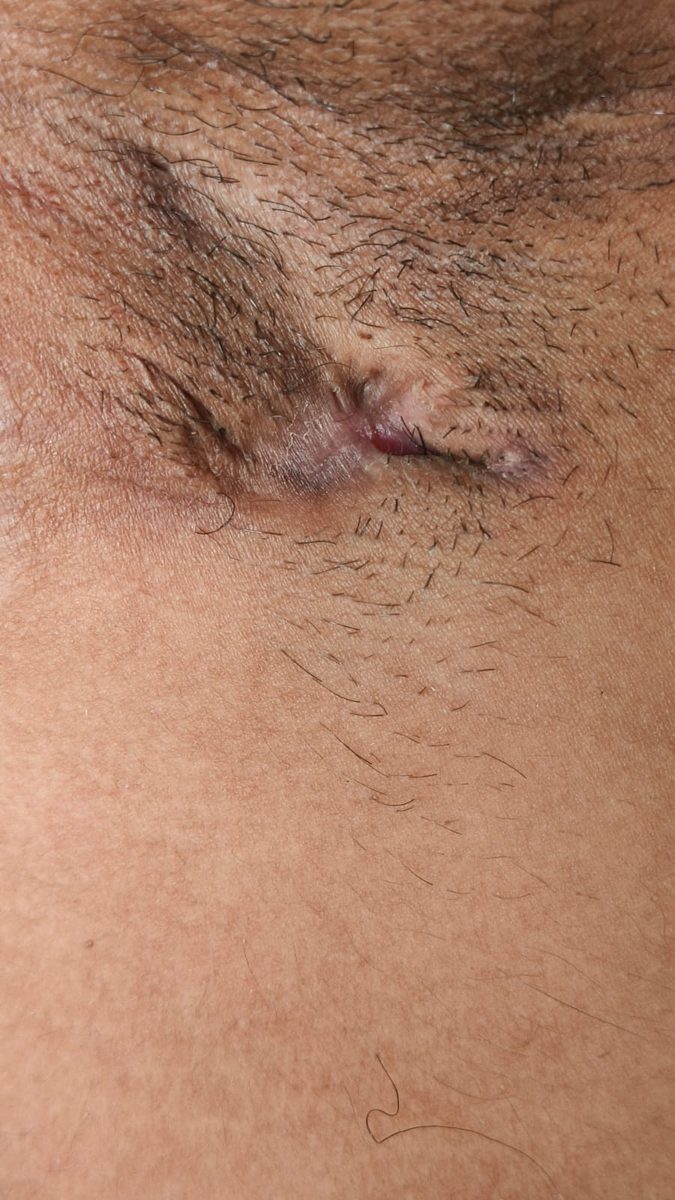
Progressive closure and flattening of the affected tissue, with further reduction in inflammatory activity.
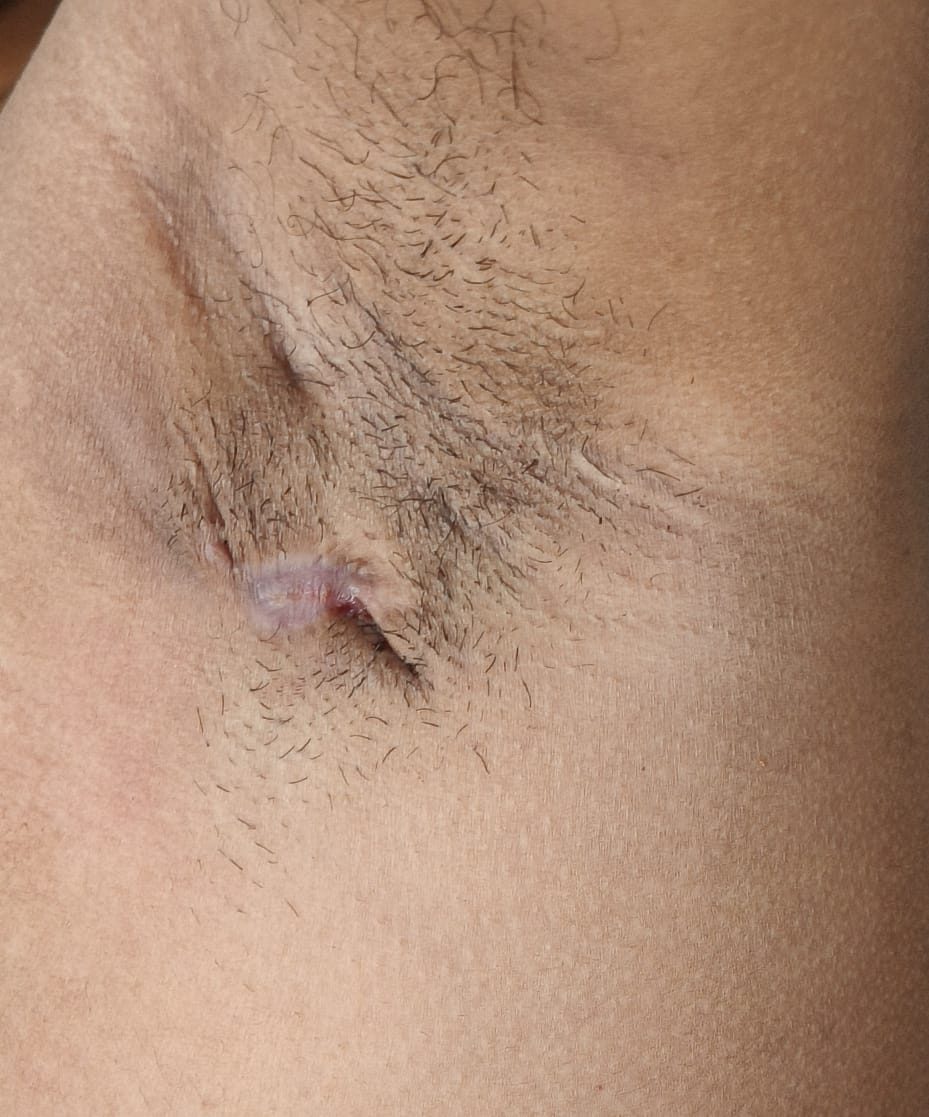
Substantial healing — the previously open lesion reduced to a small residual focal area.
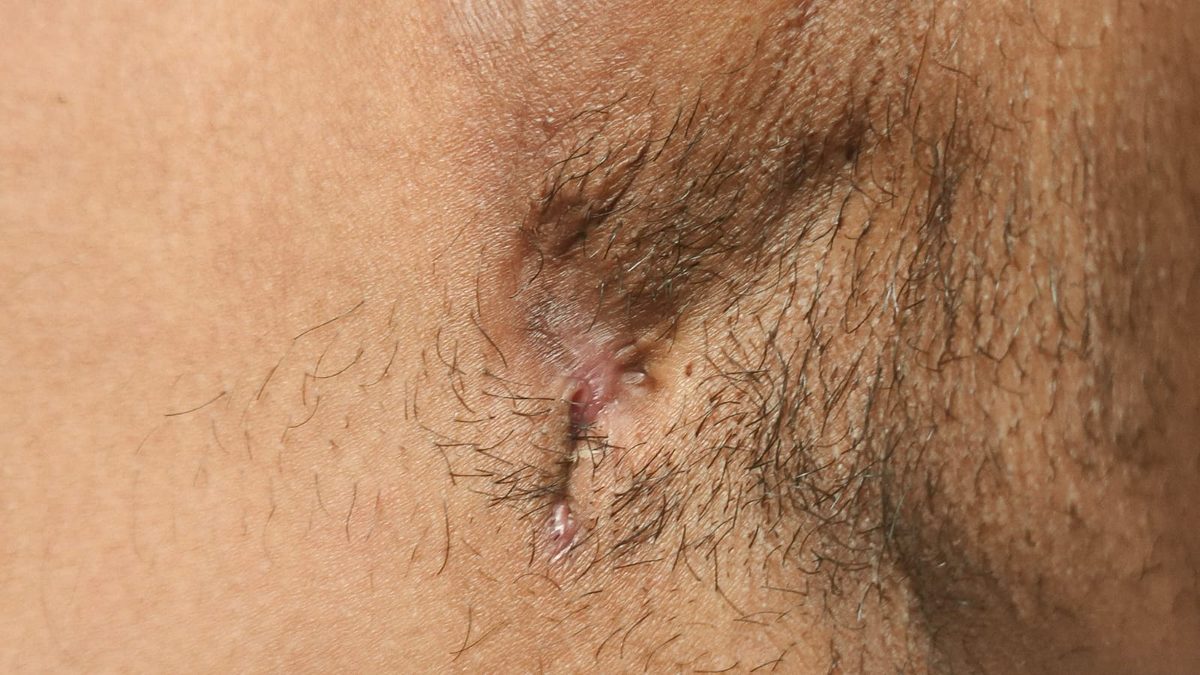
Marked improvement from baseline: substantial lesion closure, flattened tissue, and residual scar rather than active disease.
Baseline vs. final assessment
Outcome measures
Baseline vs. Month 6
| Measure | Baseline | Month 6 |
|---|---|---|
| Pain (VAS) | 8/10 | 0/10 |
| Active lesions | 1 | 0 |
| Drainage score | 5 | 0 |
| Range of motion | Restricted | Normal |
| Quality of life | Impaired | Markedly improved |
Status: By Month 6 the lesion had closed with no active drainage, and shoulder movement had returned to normal. Residual scar and post-inflammatory tissue change remained visible — that's expected and is distinguished from active disease. Whether this stays closed longer-term is something only continued follow-up can answer.
Axillary (underarm) HS
A single, chronically recurring axillary lesion is a common way HS presents, especially early on or in less extensive disease — it's easy to mistake for a recurring boil rather than HS itself, which is part of why diagnosis often takes years. Repeated incision-and-drainage on the same site can relieve pressure temporarily but doesn't address why the tissue keeps breaking down in the first place, which is why the cycle tends to repeat. The EPOH approach treats a single stubborn lesion the same way it treats widespread disease — as a local expression of an internal pattern — rather than managing that one site in isolation.
What this is, and is not. This is one individually documented case with dated follow-up — not a controlled clinical trial, and not a claim about what any other patient should expect. Outcome measures are the patient’s own reported or observed values at each visit, recorded at the time. Your presentation, severity and disease pattern may differ; your care plan should be individualised accordingly.
Explore other presentations
Have a presentation like this?
Book a Consultation
Talk to Us Directly
No forms. Message or call the clinic and a doctor’s team member will take your history.
Replies during clinic hours, Mon–Sat.