


Bilateral Axillary HS, a Shorter History
Part of the Hidradenitis & Recurrent Skin Disorders Centre
Four years of bilateral axillary disease — shorter than the ten-year case elsewhere in this group, but the same underlying pattern: both sides active together rather than one side flaring while the other stays quiet. At baseline she had active inflammatory lesions in both underarms, recurrent drainage, restricted arm movement and pain rated 7 out of 10, following years of antibiotic courses and drainage procedures that brought no lasting control.
What was recorded, visit by visit
Baseline photographs of both sides are shown below. Month-by-month clinical assessment (not photographed) recorded reduced inflammatory activity at Month 1, further reduction with tissue stabilization at Month 2, and by Month 3: pain resolved to 0/10, active lesion count and drainage score both down to zero, and range of motion back to normal on both sides.
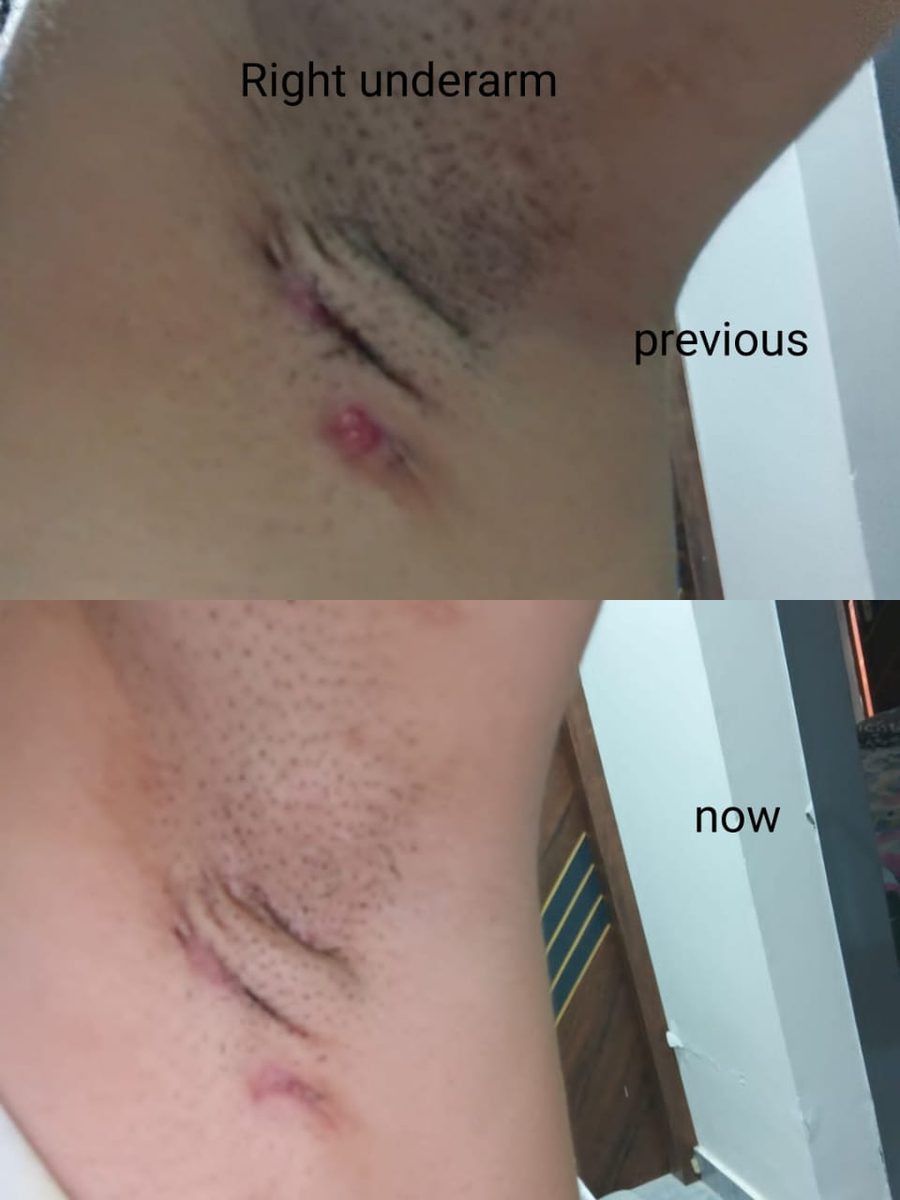
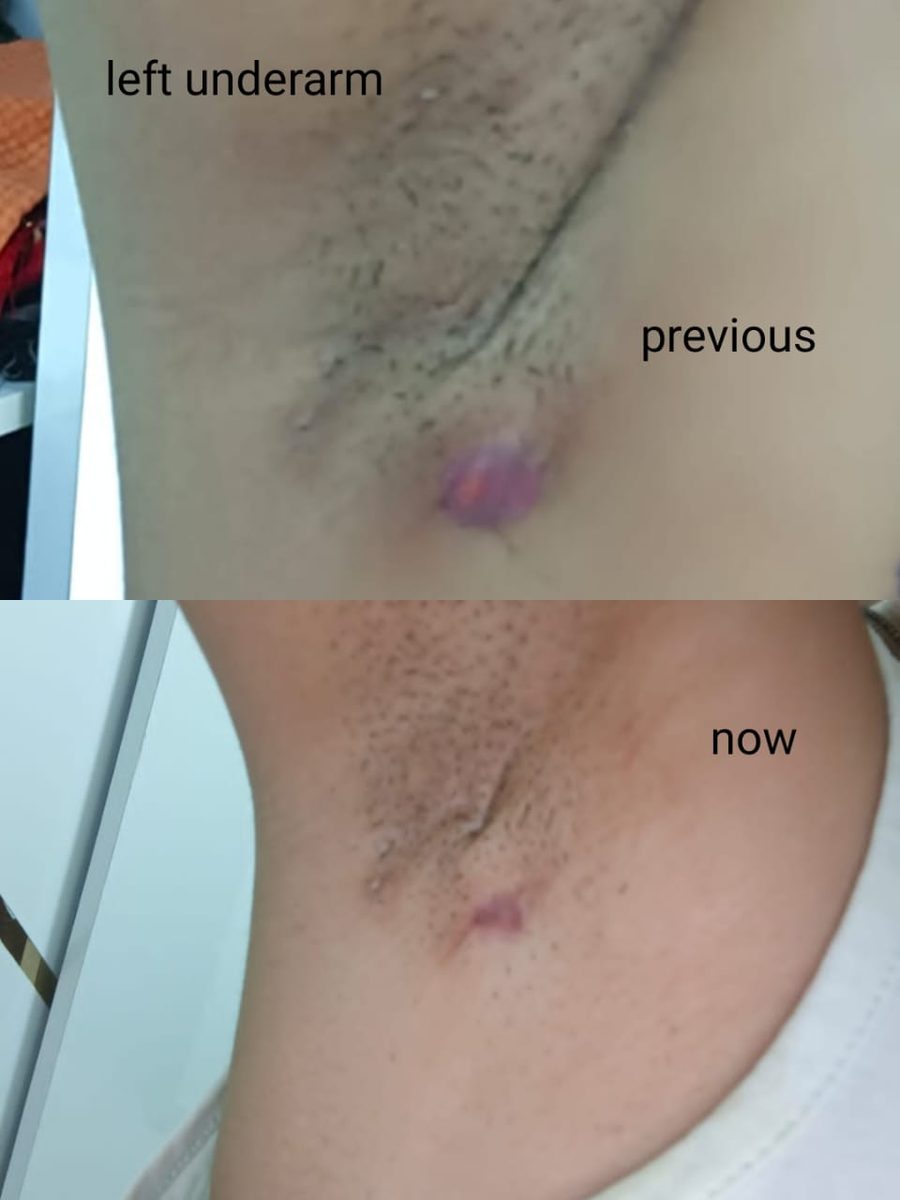
Baseline vs. final assessment
Outcome measures
Baseline vs. Final assessment
| Measure | Baseline | Final assessment |
|---|---|---|
| Pain (VAS) | 7/10 | 0/10 |
| Active lesions | 2 | 0 |
| Drainage score | 4 | 0 |
| Range of motion | Restricted | Normal |
| Quality of life | Impaired | Markedly improved |
Status: The documented clinical criteria for remission were met on both sides by the three-month assessment. Only baseline photographs were part of this patient's documentation set; the Month 3 outcome above is recorded from clinical assessment rather than a matched follow-up photograph.
Bilateral axillary HS
A four-year history is neither the earliest nor the most advanced presentation in this collection, which is exactly why it's useful to see — most patients who reach out sit somewhere in this middle range: established enough to be clearly diagnosable, not yet at the extensive tunnelling of Stage III. Bilateral involvement at this stage is still telling you the same thing it tells at ten years — that this is systemic in origin — which is why the management approach doesn't change based on duration alone.
What this is, and is not. This is one individually documented case with dated follow-up — not a controlled clinical trial, and not a claim about what any other patient should expect. Outcome measures are the patient’s own reported or observed values at each visit, recorded at the time. Your presentation, severity and disease pattern may differ; your care plan should be individualised accordingly.
Explore other presentations
Have a presentation like this?
Book a Consultation
Talk to Us Directly
No forms. Message or call the clinic and a doctor’s team member will take your history.
Replies during clinic hours, Mon–Sat.