


Hidradenitis Suppurativa Affecting Both Underarms
Part of the Hidradenitis & Recurrent Skin Disorders Centre
Ten years of disease activity in both underarms — this is one of the longer-standing cases in this collection, and one of the reasons HS is understood as a systemic condition rather than a local skin problem: it rarely stays confined to one side once it's established bilaterally, because whatever internal pattern is driving it doesn't respect the midline. Both sides were active at baseline, with recurrent lesions, drainage, restricted movement and pain rated 8 out of 10, despite a decade of antibiotic courses and drainage procedures.
What was recorded, visit by visit
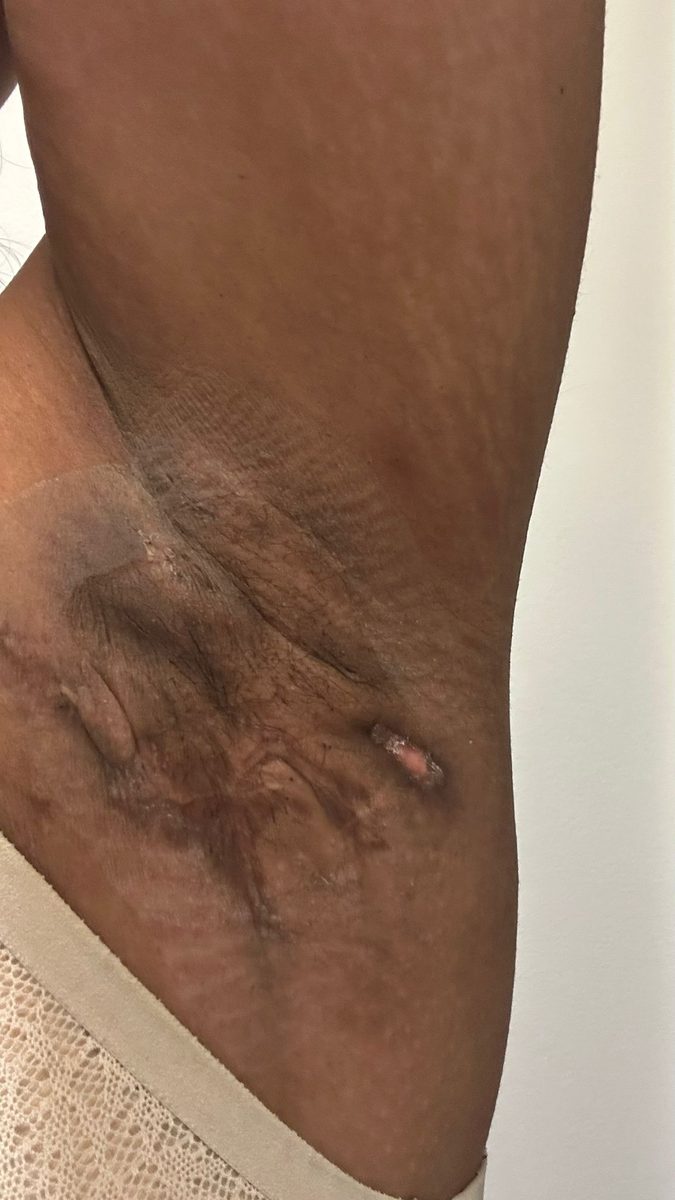
Active local disease in the left axilla prior to treatment.
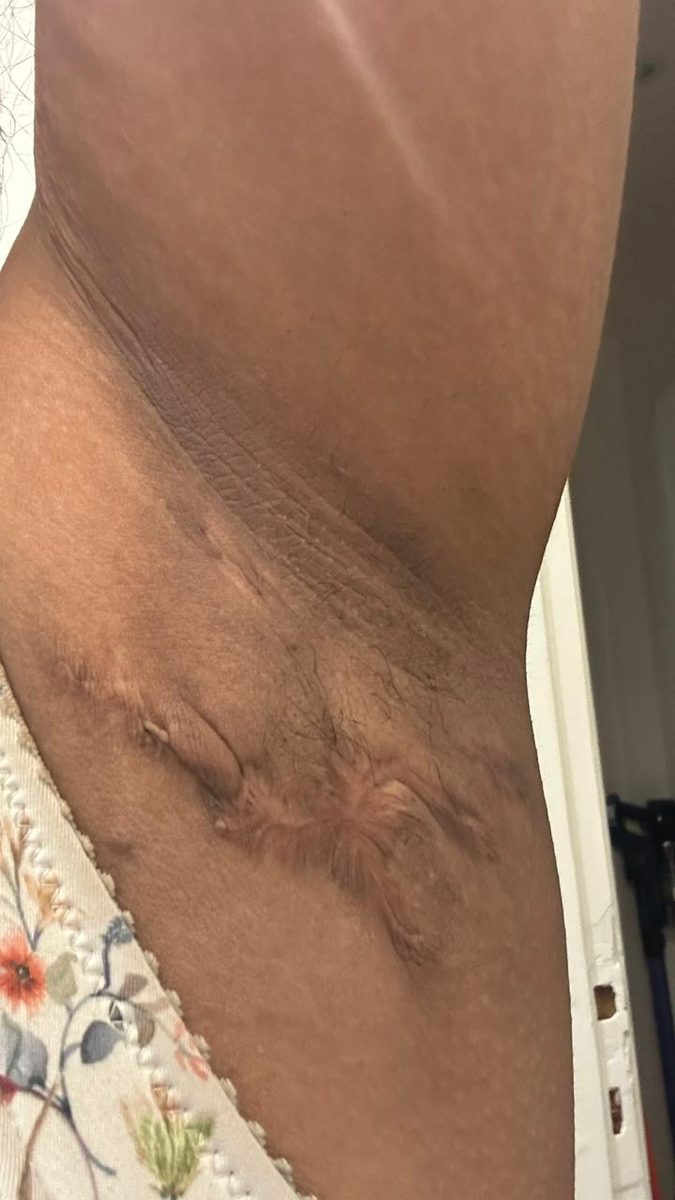
Marked reduction in visible inflammatory activity and substantial tissue healing.
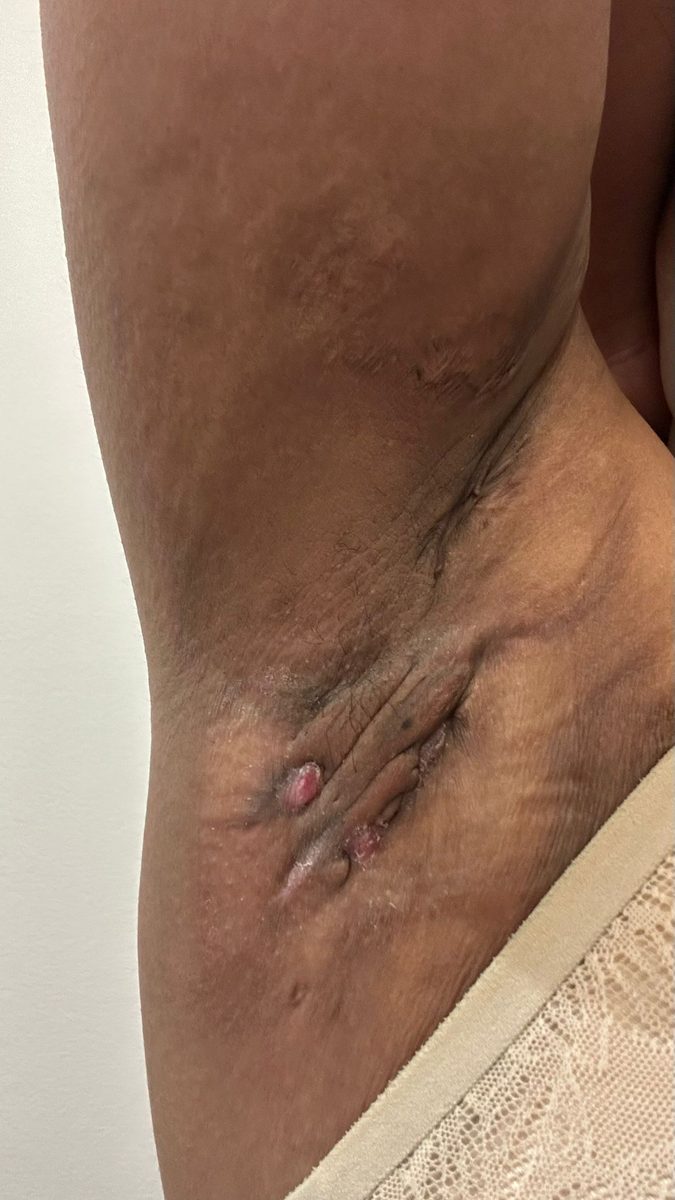
Active local disease in the right axilla, documented separately from the left.
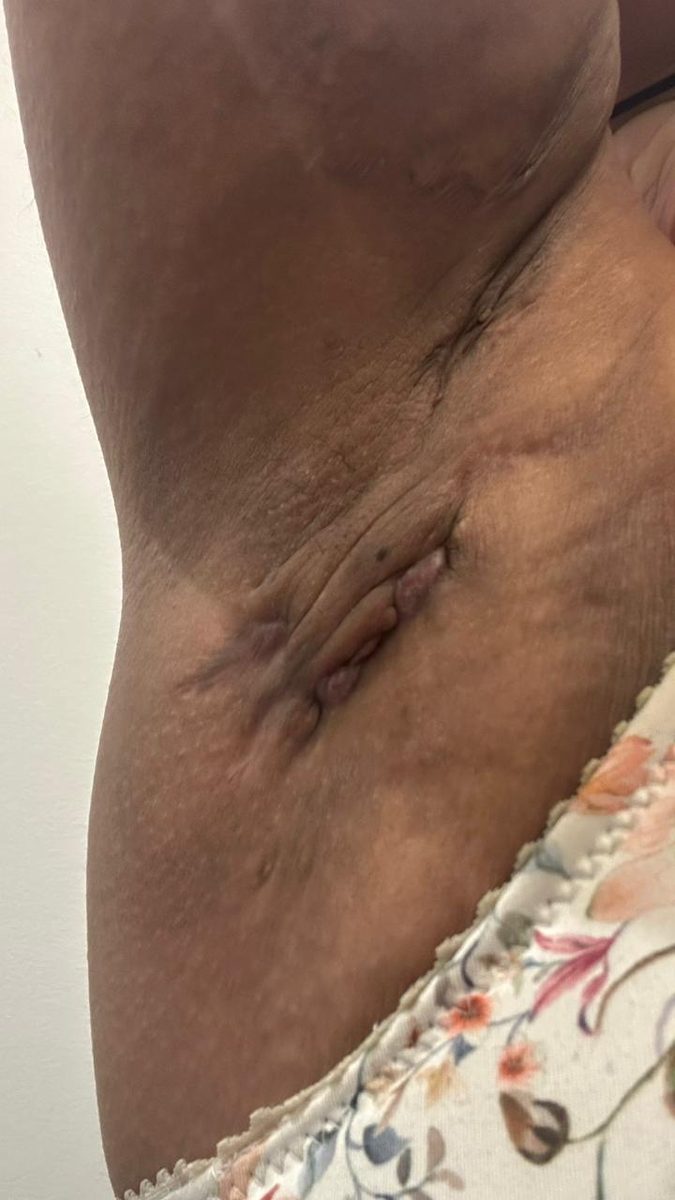
Matching improvement on the right side by the three-month assessment.
Baseline vs. final assessment
Outcome measures
Baseline vs. Month 3 · right
| Measure | Baseline | Month 3 · right |
|---|---|---|
| Pain (VAS) | 8/10 | 0/10 |
| Active lesions | 2 | 0 |
| Drainage score | 4 | 0 |
| Range of motion | Restricted | Normal |
| Quality of life | Impaired | Markedly improved |
Status: Both sides met the documented remission criteria at Month 3 — no active lesions, no drainage, full pain resolution, and normal range of motion, tracked and photographed independently left and right rather than assumed from one side. A ten-year history is a long time for a pattern to be established; how durable this stays is something only continued follow-up will show.
Bilateral axillary HS
Bilateral, symmetric involvement is one of the clearer clinical signals that HS is being driven by something systemic rather than a local, one-sided skin issue — a single point of local trauma or infection doesn't typically produce a mirror-image lesion on the opposite side of the body. That symmetry is part of why the EPOH framework treats HS as an internal-driver condition expressing outward, and why treatment isn't site-specific: correcting what's generating the disease should show up on both sides at once, which is exactly the pattern documented here.
What this is, and is not. This is one individually documented case with dated follow-up — not a controlled clinical trial, and not a claim about what any other patient should expect. Outcome measures are the patient’s own reported or observed values at each visit, recorded at the time. Your presentation, severity and disease pattern may differ; your care plan should be individualised accordingly.
Explore other presentations
Have a presentation like this?
Book a Consultation
Talk to Us Directly
No forms. Message or call the clinic and a doctor’s team member will take your history.
Replies during clinic hours, Mon–Sat.