


Intermammary HS, Documented to Remission
Part of the Hidradenitis & Recurrent Skin Disorders Centre
Five years of recurrent lesions in the intermammary/anterior chest region, with two active inflammatory lesions and drainage present at baseline. Like the other intermammary case in this collection, this is Hurley Stage I disease — the earliest clinical classification — but a five-year history shows that 'early stage' describes lesion pattern, not necessarily how long the condition has quietly been active before it's recognized and treated.
What was recorded, visit by visit

Active inflammatory lesion activity with drainage in the intermammary/anterior chest region.
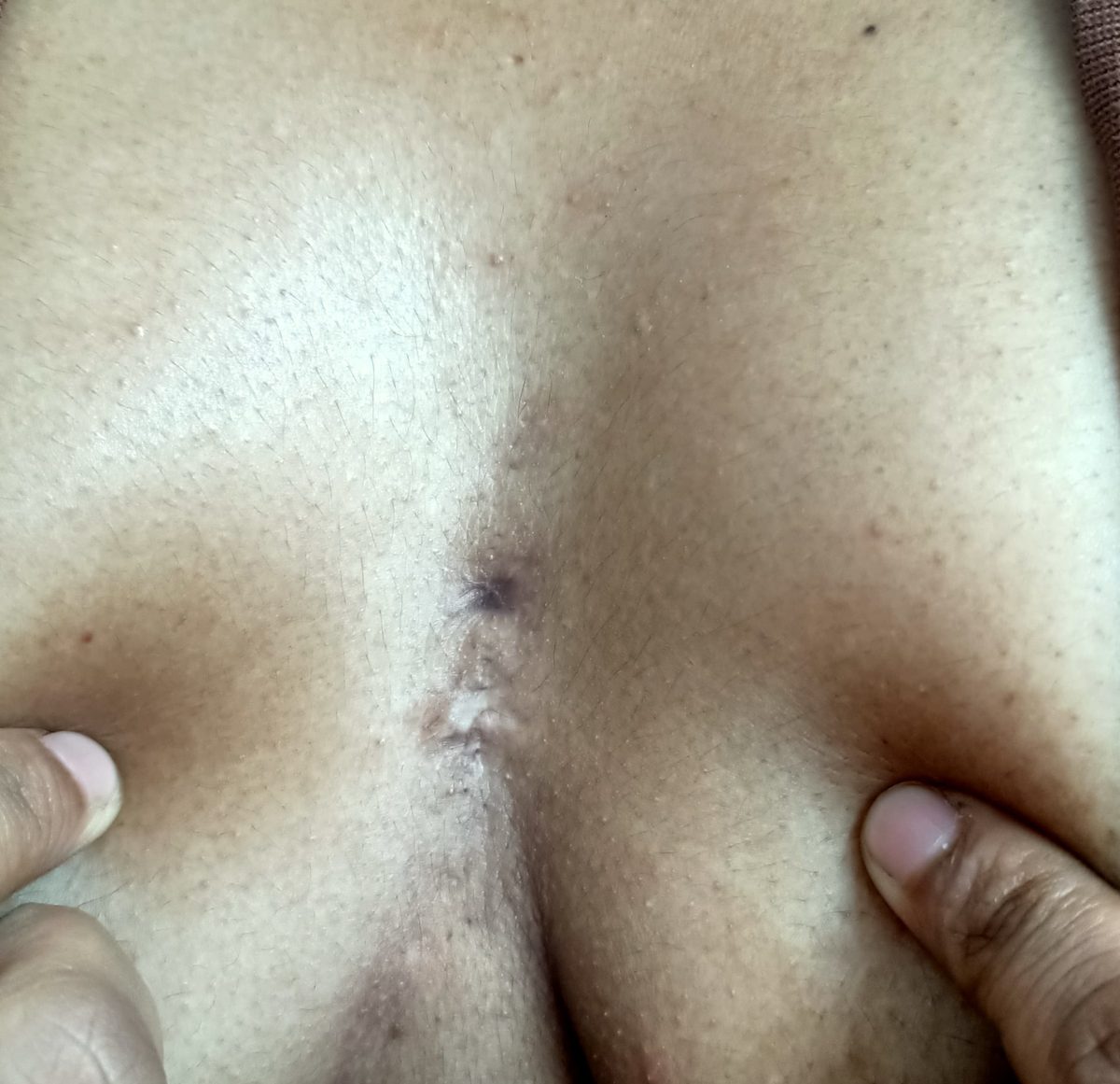
Marked reduction in visible inflammatory burden and drainage, with flattening of the previously prominent lesion.

Resolution of the previously active lesion, no visible drainage, and residual post-inflammatory skin change only.
Baseline vs. final assessment
Outcome measures
Baseline vs. Month 3
| Measure | Baseline | Month 3 |
|---|---|---|
| Pain (VAS) | 8/10 | 0/10 |
| Active lesions | 2 | 0 |
| Drainage score | 3 | 0 |
| Range of motion | Restricted | Normal |
| Quality of life | Impaired | Markedly improved |
Status: At Month 3 the documented criteria for clinical remission were met — no active lesions, no drainage, full pain resolution and normal range of motion. Set beside the other intermammary case in this collection, which had a shorter history but only a partial response in the same window, this is a reminder that duration alone doesn't predict how a case will respond.
Intermammary & anterior chest HS
Hurley Stage I is defined by isolated lesions without the sinus tract formation or scarring bands that mark Stage II and III — it's the pattern most likely to be misread as recurring acne or an ingrown-hair infection, especially on the chest where HS is discussed less often than the axilla or groin. That's part of why documenting this site specifically matters: recognizing the pattern early, at this stage, is what keeps a case in the range where full remission — as seen here — is a realistic outcome rather than an aspiration.
What this is, and is not. This is one individually documented case with dated follow-up — not a controlled clinical trial, and not a claim about what any other patient should expect. Outcome measures are the patient’s own reported or observed values at each visit, recorded at the time. Your presentation, severity and disease pattern may differ; your care plan should be individualised accordingly.
Explore other presentations
Have a presentation like this?
Book a Consultation
Talk to Us Directly
No forms. Message or call the clinic and a doctor’s team member will take your history.
Replies during clinic hours, Mon–Sat.