


Intermammary HS, an Honest Partial Response
Part of the Hidradenitis & Recurrent Skin Disorders Centre
This case is included deliberately because it did not reach full remission, and a spectrum of presentations should show that honestly rather than only the cleanest outcomes. At baseline, two active inflammatory lesions with drainage were present in the intermammary/anterior chest region — a site with its own friction and moisture challenges distinct from the axilla — following three to four years of recurrent activity and repeated antibiotic and drainage treatment that hadn't produced lasting control.
What was recorded, visit by visit
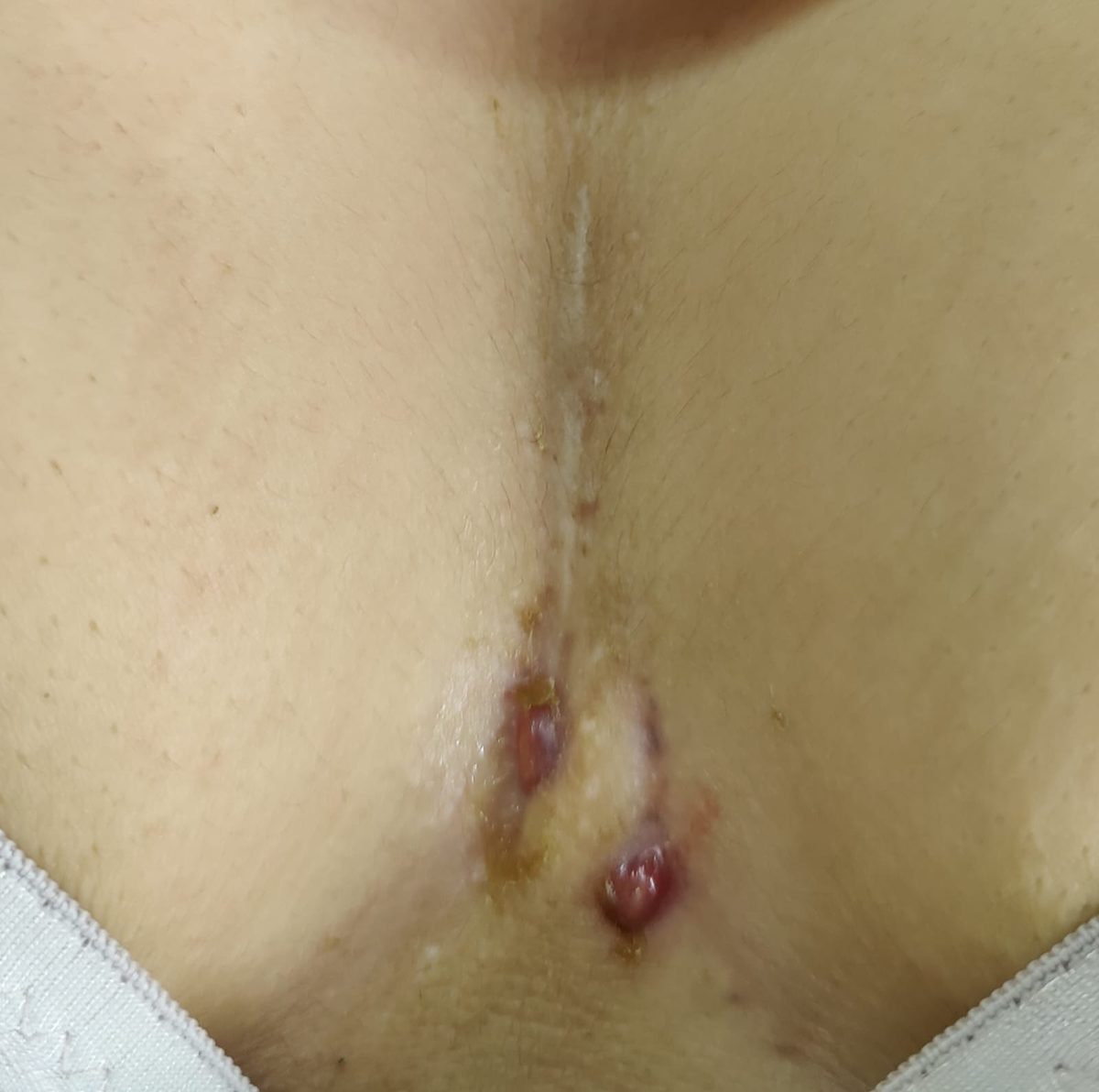
Two active inflammatory lesions with drainage in the intermammary/anterior chest region.
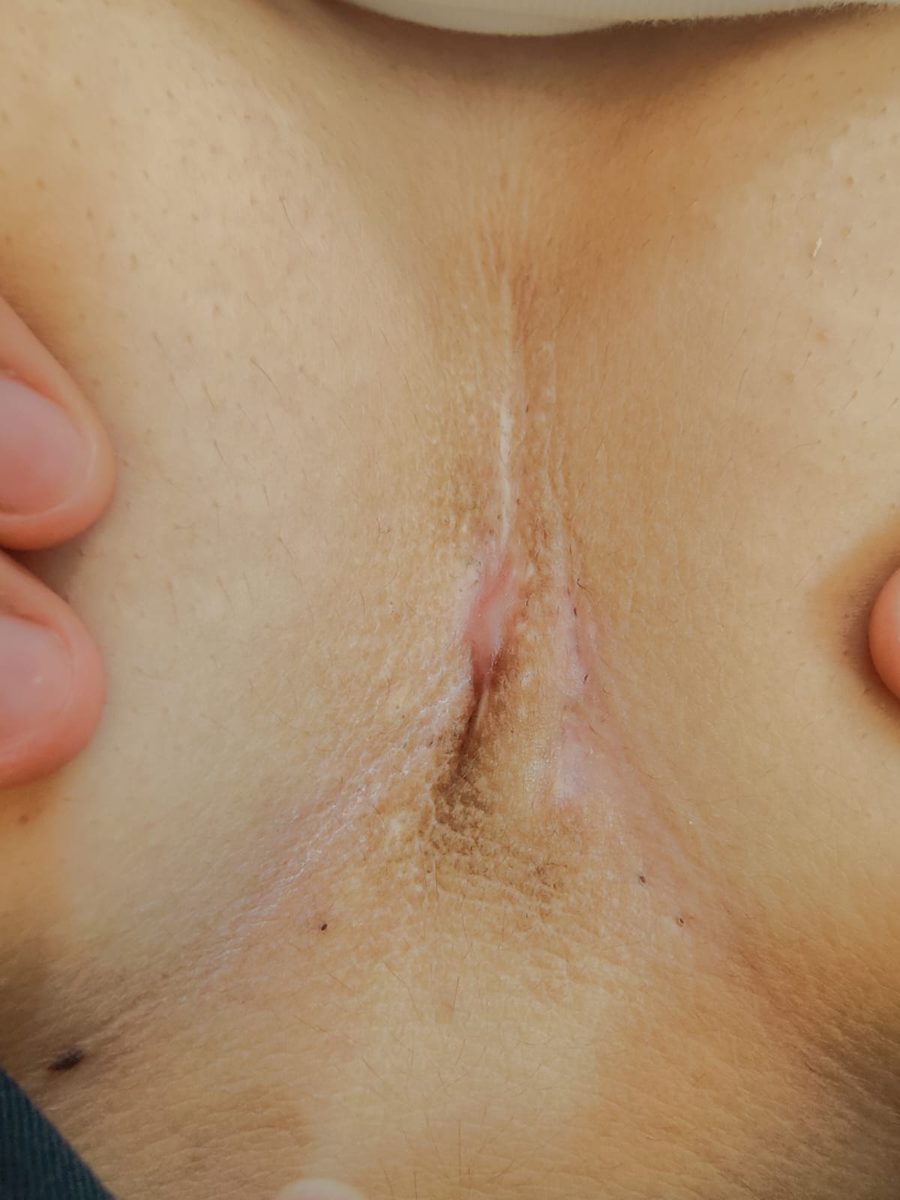
Marked reduction in visible inflammatory burden and drainage, with flattening of the previously prominent lesions.
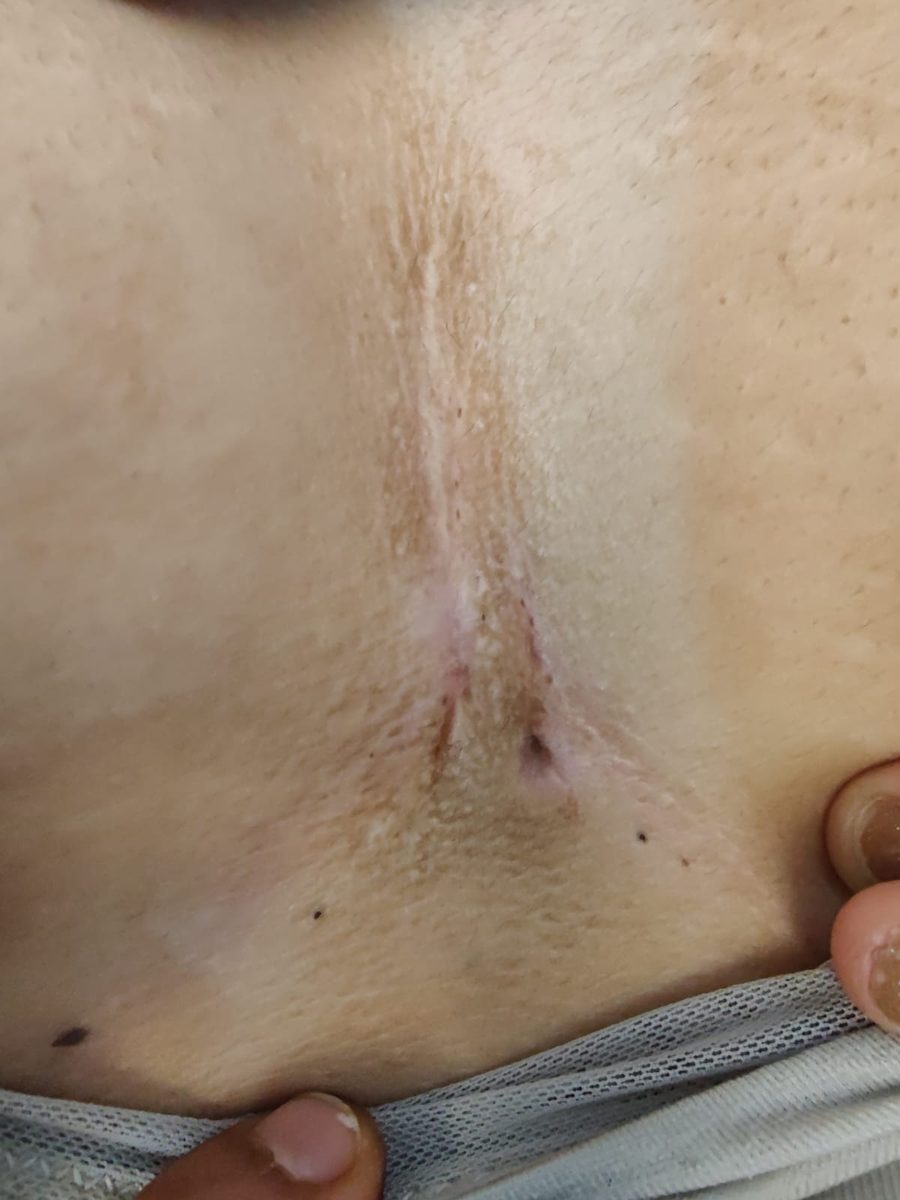
Substantial local tissue healing and reduced inflammatory activity; one residual active lesion remained.
Baseline vs. final assessment
Outcome measures
Baseline vs. Month 3
| Measure | Baseline | Month 3 |
|---|---|---|
| Pain (VAS) | 7/10 | 0/10 |
| Active lesions | 2 | 1 |
| Drainage score | 4 | 1 |
| Range of motion | Restricted | Normal |
| Quality of life | Impaired | Markedly improved |
Status: By Month 3, pain had fully resolved and range of motion and quality of life had markedly improved — but one active lesion and minimal drainage remained, so this did not meet the documented criteria for full clinical remission at this assessment point. That's a real, common shape of response: substantial improvement without complete resolution in the recorded window. Continued follow-up would be needed to see whether the residual activity resolves with more time or represents a slower-responding component of the disease.
Intermammary & anterior chest HS
The intermammary and anterior chest area carries its own version of the friction-and-occlusion environment that drives HS in skin folds generally, compounded by clothing and, for many patients, bra pressure across the exact site involved. It's a less commonly discussed HS location than the axilla or groin, which can mean longer delays before patients recognize the pattern or get an accurate diagnosis. Partial response within a three-month window, as documented here, isn't a failure of the case — the EPOH protocol's own timeline expects a longer arc for the biological correction it targets than three months represents.
What this is, and is not. This is one individually documented case with dated follow-up — not a controlled clinical trial, and not a claim about what any other patient should expect. Outcome measures are the patient’s own reported or observed values at each visit, recorded at the time. Your presentation, severity and disease pattern may differ; your care plan should be individualised accordingly.
Explore other presentations
Have a presentation like this?
Book a Consultation
Talk to Us Directly
No forms. Message or call the clinic and a doctor’s team member will take your history.
Replies during clinic hours, Mon–Sat.