


Multi-Site HS: Marked Improvement, Honestly Short of Remission
Part of the Hidradenitis & Recurrent Skin Disorders Centre
Severe, Hurley Stage III disease across multiple affected regions, with a six-to-seven-year history behind it — multiple active inflammatory lesions, recurrent drainage, chronic sinus tracts, established scar tissue, and pain she rated 8 out of 10 at baseline. This is the most extensive presentation in this collection, and it's shown alongside the case that reached full remission specifically because both outcomes are real and both are documented honestly rather than only publishing the stronger result.
What was recorded, visit by visit
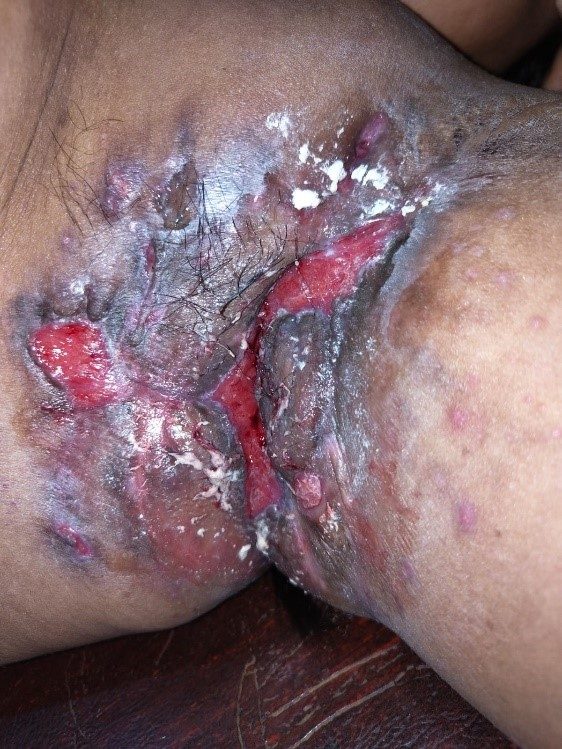
Extensive active inflammatory disease with drainage, sinus tract formation and established scarring across multiple regions.
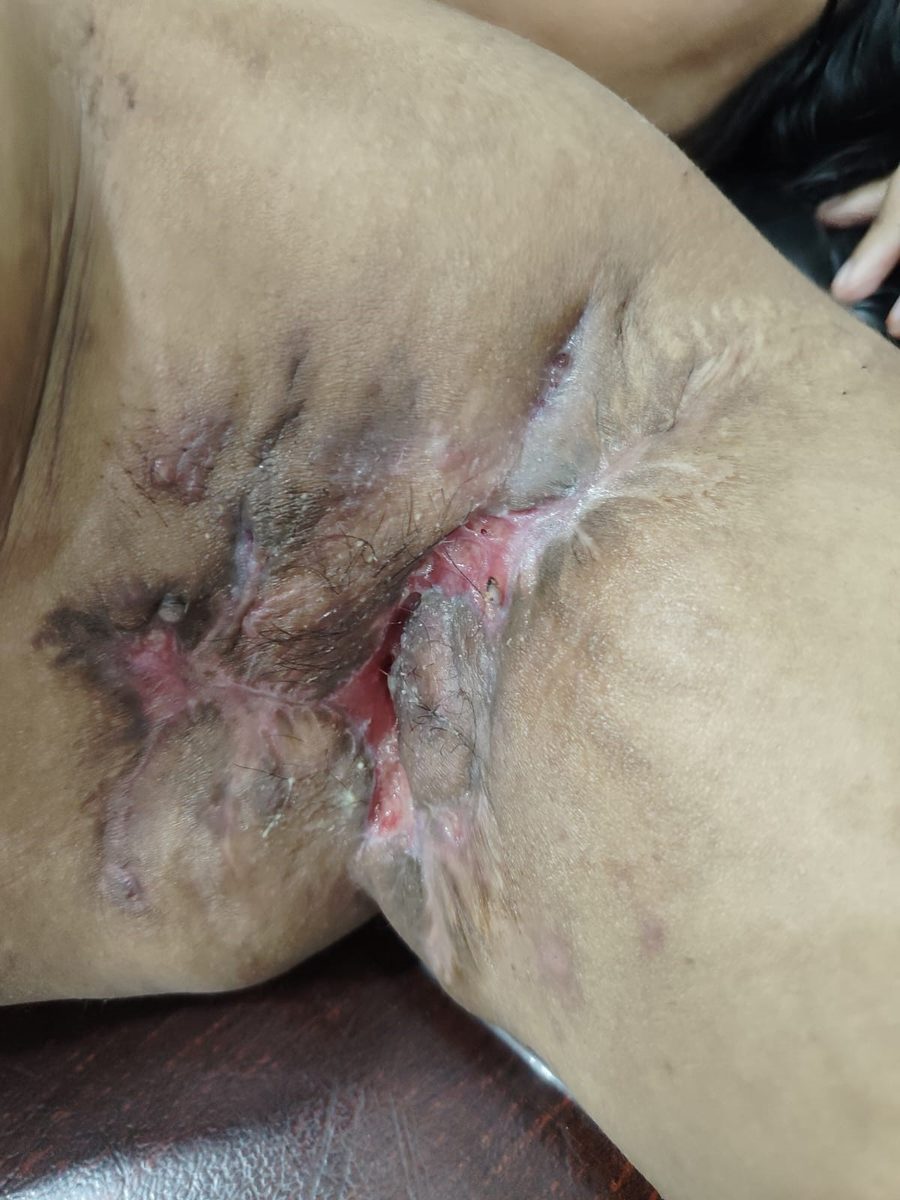
Reduced inflammatory burden with ongoing tissue healing and decreased disease activity.
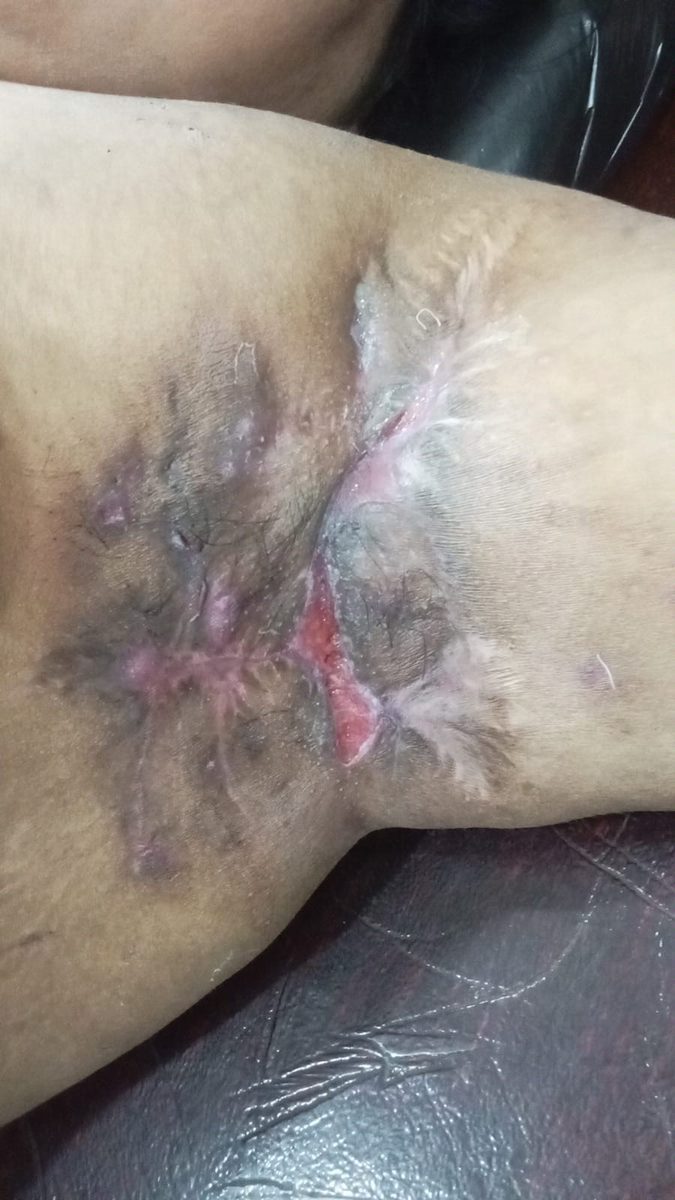
Progressive tissue recovery, with reduced drainage, lesion burden and inflammatory activity.
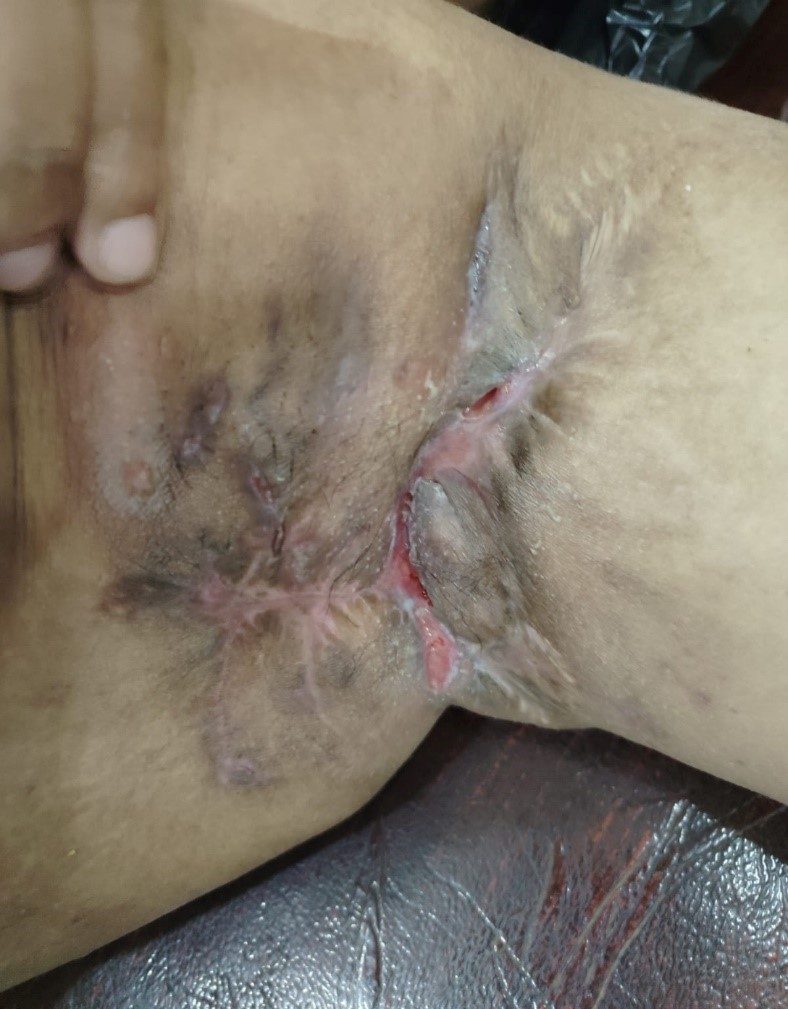
Marked clinical improvement, with substantial tissue healing and scar remodeling; minimal residual lesion activity and drainage remained.
Baseline vs. final assessment
Outcome measures
Baseline vs. Month 9
| Measure | Baseline | Month 9 |
|---|---|---|
| Pain (VAS) | 8/10 | 0/10 |
| Active lesions | 5 | 1 |
| Drainage score | 4 | 1 |
| Range of motion | Severely restricted | Normal |
| Quality of life | Severely impaired | Markedly improved |
Status: By Month 9, pain had fully resolved, mobility had returned to normal and quality of life was markedly improved — but minimal residual lesion activity and drainage persisted, so this case approached but did not fully meet the predefined criteria for clinical remission in the documented window. We're showing it in full alongside the case that did reach remission because Stage III, multi-site disease is genuinely harder to fully resolve, and an honest spectrum has to include what 'substantial but incomplete' response actually looks like.
Multi-site HS
Multi-site Hurley Stage III disease — several affected regions at once, each with its own tunnelling and scarring — represents the most advanced and most systemic end of the HS spectrum. When disease this extensive has been active for years, the tissue itself carries structural change (fibrosis, established tunnels) that doesn't reverse as readily as active inflammation does, even once the internal drivers generating new lesions are addressed. Marked, substantial improvement — as documented here — is a meaningful clinical outcome in its own right, and for Stage III disease of this extent it is not automatically the same as complete remission within nine months.
What this is, and is not. This is one individually documented case with dated follow-up — not a controlled clinical trial, and not a claim about what any other patient should expect. Outcome measures are the patient’s own reported or observed values at each visit, recorded at the time. Your presentation, severity and disease pattern may differ; your care plan should be individualised accordingly.
Explore other presentations
Have a presentation like this?
Book a Consultation
Talk to Us Directly
No forms. Message or call the clinic and a doctor’s team member will take your history.
Replies during clinic hours, Mon–Sat.