


Multi-Site HS, Documented to Full Remission
Part of the Hidradenitis & Recurrent Skin Disorders Centre
Severe Hurley Stage III disease across multiple regions, with a comparatively shorter three-and-a-half-year history than the other multi-site case in this collection. At baseline: multiple inflammatory nodules, active draining sinus tracts, chronic drainage, extensive scarring, and pain rated 9 out of 10 — the highest baseline pain score recorded in this whole set of nine cases — alongside significant functional limitation.
What was recorded, visit by visit
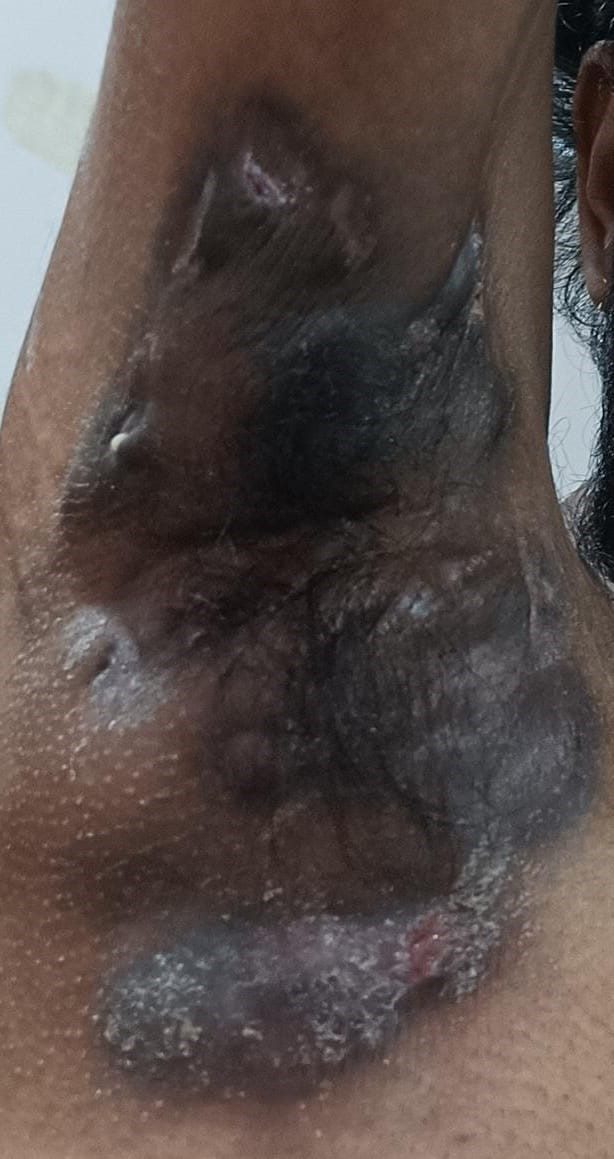
Active inflammatory disease with drainage, sinus tract formation and extensive tissue involvement across multiple regions.
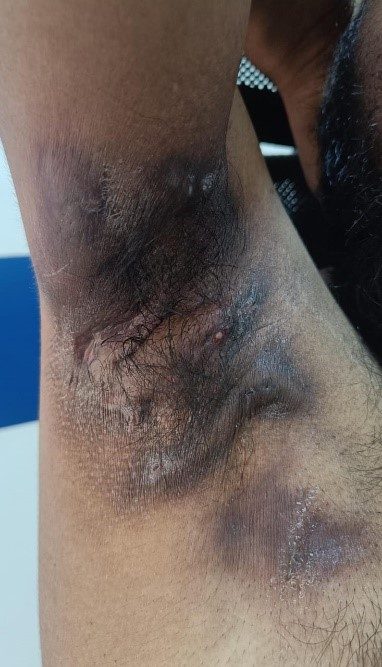
Reduced inflammatory burden, decreased drainage and early tissue recovery.
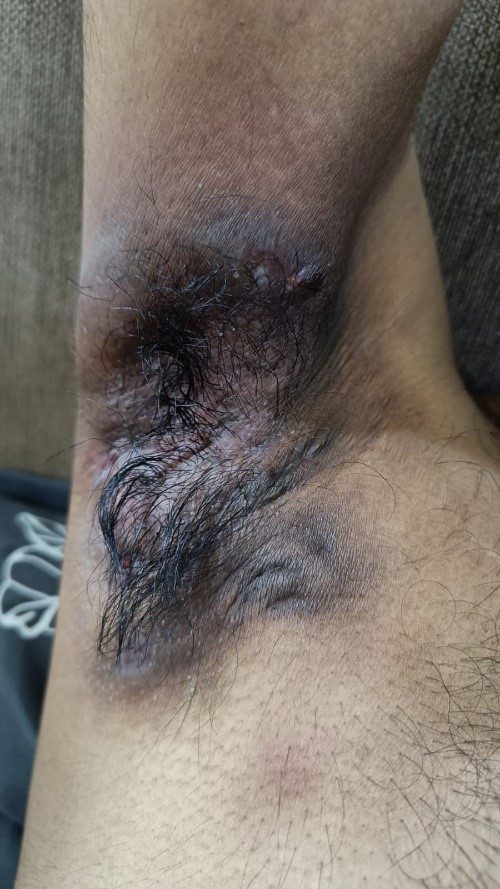
Reduced active lesions and drainage, with improved tissue integrity and progressive scar maturation.
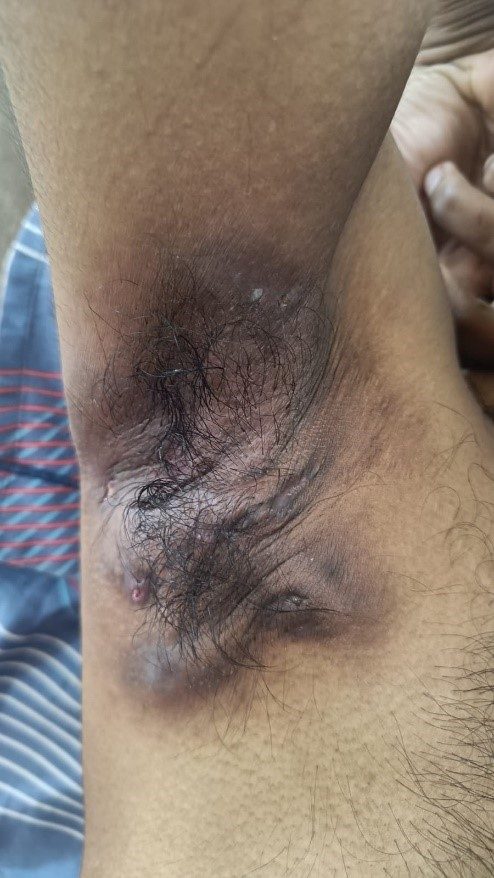
No clinically active inflammatory lesions or drainage identified; substantial tissue healing and scar maturation evident.
Baseline vs. final assessment
Outcome measures
Baseline vs. Month 9
| Measure | Baseline | Month 9 |
|---|---|---|
| Pain (VAS) | 9/10 | 0/10 |
| Active lesions | 6 | 0 |
| Drainage score | 4 | 0 |
| Range of motion | Restricted | Normal |
| Quality of life | Severely impaired | Markedly improved |
Status: At Month 9 the documented criteria for clinical remission were fully met — no active nodules, no abscesses, no drainage, no active sinus tracts, and no evidence of progressive disease. Set beside the other multi-site Stage III case in this collection, which reached marked but incomplete improvement over the same nine months, this shows that even the most extensive, highest-baseline-pain presentation here can resolve fully — while making clear that isn't the guaranteed outcome for every case at this severity.
Multi-site HS
Multiple affected regions at Hurley Stage III is a severe presentation by any measure, and the shorter disease duration here — three and a half years, versus six to seven in the other multi-site case — may be part of why the tissue had more capacity to recover fully once the internal activity driving it was addressed. That's consistent with what's understood about HS generally: earlier intervention, even in a severe presentation, tends to leave less structural damage to reverse than the same severity left active for twice as long.
What this is, and is not. This is one individually documented case with dated follow-up — not a controlled clinical trial, and not a claim about what any other patient should expect. Outcome measures are the patient’s own reported or observed values at each visit, recorded at the time. Your presentation, severity and disease pattern may differ; your care plan should be individualised accordingly.
Explore other presentations
Have a presentation like this?
Book a Consultation
Talk to Us Directly
No forms. Message or call the clinic and a doctor’s team member will take your history.
Replies during clinic hours, Mon–Sat.