


Part of the Pemphigus & Bullous Disorders Knowledge Library
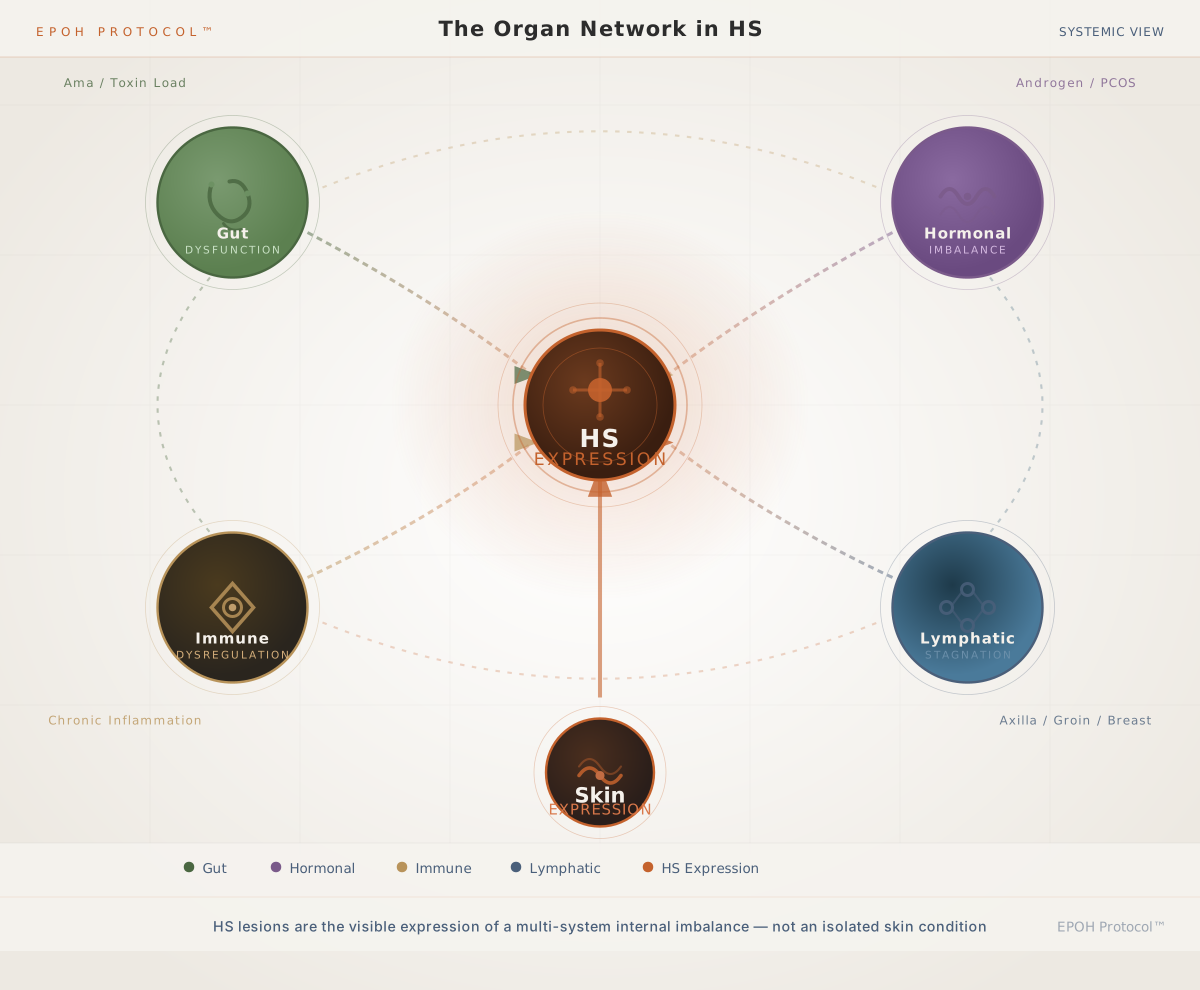
The blister is the last event in a long chain
Everyone — patients, families, and a depressing number of practitioners — treats blistering disease as a skin problem, because that is where you can see it. It is an understandable mistake and it is the single most expensive one you can make.
Your antibody is not made in your skin. It is made by plasma cells in your lymph nodes and your bone marrow. It travels in your blood. Skin is not where the disease lives. Skin is where the disease lands.
Everything about how this should be treated follows from that.
The chain, in order
- Genetic susceptibility. Particular HLA class II types make loss of tolerance more likely. They are necessary and nowhere near sufficient — most people carrying them never develop pemphigus.
- Loss of tolerance. The immune system stops treating a self-protein as self. Why, in a given person, at a given time, is not known.
- Autoreactive B cells are activated and helped by T cells.
- Plasma cells produce autoantibody — against desmoglein 3 and desmoglein 1 in pemphigus; against BP180 (collagen XVII) and BP230 in pemphigoid. Some of those plasma cells are long-lived, sit in bone marrow, and are relatively resistant to steroids.
- The antibody circulates, in your blood, reaching every organ.
- It binds its target — the desmosome in pemphigus, the hemidesmosome at the basement membrane zone in pemphigoid.
- Damage follows. In pemphigus, adhesion is directly disrupted and a signalling cascade pulls keratinocytes apart. In pemphigoid, complement activation, mast-cell degranulation, eosinophil and neutrophil recruitment and protease release cleave the anchoring proteins.
- A blister appears. Or, in pemphigus, ruptures immediately and you never even see it — only the raw erosion left behind.
Count the links. A topical enters at step eight.
The disease you cannot see
Calling this "a skin condition" also badly understates what it does.
Mucosa. In pemphigus vulgaris the mouth is usually first — cheeks, palate, gums, throat. It can extend to the oesophagus, causing pain on swallowing, food sticking, and in time, narrowing. The nose, the larynx (hoarseness), the conjunctiva, the genital and anal mucosa can all be involved. Mucous membrane pemphigoid scars, and scarring of the eye surface can take your sight.
Nutrition. People with oral pemphigus stop eating, because eating is agony. Weight loss and malnutrition are disease features, not lifestyle problems, and they remove the raw material the body needs to repair anything.
Barrier failure. Large erosions lose fluid and protein. They get colonised and infected. Infection — not the blistering itself — is the classic cause of death in severe pemphigus. Temperature regulation suffers when a large area of skin is raw.
Pain and sleep. Both severe, both relentless, both with their own metabolic and immune consequences.
Company it keeps. Pemphigus clusters with other autoimmune conditions — thyroid disease among them, and there is a well-described association with myasthenia gravis and thymoma. Paraneoplastic pemphigus is associated with underlying lymphoproliferative malignancy and can involve the lungs; it is dangerous and must not be missed. Bullous pemphigoid clusters with neurological disease.
Mind. Depression and anxiety are common in this disease and badly under-treated. You are disfigured, in pain, exhausted, frightened, and on drugs that themselves cause agitation and insomnia. That is a physiological situation, not a weakness of character.
And your treatment is systemic too. Steroids, azathioprine, mycophenolate, rituximab — none of these are skin drugs. Conventional medicine already agrees with the thesis of this article. It treats your immune system, not your skin.
The inference
If the disease is systemic, a protocol that begins at the skin begins at the end.
That is not a rhetorical flourish. It is the reason for the shape of the protocol we run.
The sequence, and why the topicals come fourth
EPOH is entirely formulation-based: oral compounds and topical preparations, couriered to you and taken at home. For most patients there is no procedure, no in-clinic therapy and no clinic visit.
The sequence is fixed, and the sequence is the medicine:
- Phase 1 — Lowering Inflammatory Load. The systemic inflammatory burden the immune response is running on.
- Phase 2 — Internal Healing & Gut Repair. The internal terrain, and the barrier that is being damaged both by the illness and by the drugs treating it.
- Phase 3 — Functional Detox & Immune Balancing. Only once L and I are stable.
- Phase 4 — External Care & Local Reversal. Topical preparations you apply at home — the erosions, the healing surface, the itch at the skin.
- Phase 5 — Sustaining Remission. The long tail, where relapse is either headed off or not.
Phase 4 is fourth on purpose. It is fourth because the surface is the last link in the chain, and because the surface can only respond once the flow arriving at it has slowed. Treating the blister first is mopping the floor with the tap still running — and every patient who has spent a year applying preparations to their skin while the disease carried on underneath knows exactly what that feels like.
The rule that decides whether this helps you or hurts you
Phase 3, applied before L and I are stable, mobilises internal load faster than the system can clear it — and the condition gets worse.
That is not a caution buried in a leaflet. It is the mechanism behind the worst experience people have had with Ayurveda in this disease. They arrived at a practitioner, were started on a "cleanse" or a "detox" — something aimed at removing before anything had been calmed or repaired — and within weeks they flared badly. They concluded, reasonably, that Ayurveda made their blistering disease worse, and they never went back.
They were right that they got worse. They were wrong about the reason. The timing was wrong, not the approach.
The honest limit — and this one matters
"Systemic" does not mean "fixable with diet".
Recognising that a disease is systemic tells you where to look. It does not, by itself, tell you that any given systemic treatment works. Those are two different claims, and the wellness industry has spent twenty years running them together.
So here is our position, stated where you can hold us to it: there is no randomised controlled trial of EPOH in pemphigus or pemphigoid. We are not going to pretend there is. What we have is a mechanism that is coherent, a sequence we have reasons for, endpoints that can be measured, and a timeline you can judge us against. That is less than proof. It is more than a slogan. You are entitled to decide that it is not enough, and if you do, that is a rational decision and we will not argue you out of it.
The timeline, and the rule about your drugs
The first four to eight weeks are internal work. Visible change on your skin is not expected in that window — and any clinic that promises otherwise is setting you up to quit in week five. From months two to four, the disease should begin to change: fewer new lesions, faster closure of erosions, less itch, less mucosal pain, an antibody titre trend that is moving. Stable remission is assessed from month eight onwards.
We do not promise a cure. We aim at sustained remission, alongside your dermatologist and never instead of them.
You continue every drug you have been prescribed — steroid, rituximab, azathioprine, mycophenolate, dapsone, doxycycline, topical steroid. We do not adjust, taper or discontinue any prescription. Every change is made by the doctor who prescribed it.
The test to apply
Ask any practitioner offering to treat your blistering disease one question: "What are you treating — the blister, or the thing that makes the blister?" Then ask them what they are measuring, and when they will tell you it has not worked.
Medical disclaimer. This article is for general information and is not a substitute for personalised medical advice. Ayurvedic treatment at EliteAyurveda™ is individualised following clinical assessment. Do not start, stop or alter any prescribed medication without consulting your treating physician.

